

 Portable Chiller
 Air-Cooled Chiller
 Water-cooled Chiller
 Low-temperature Chiller
 Custom Industrial Chiller


Reactor cooling systems sit at the intersection of thermal engineering, process chemistry, and safety design. Unlike conventional industrial cooling, reactor temperature control isn’t just about preventing overheating—it directly determines reaction kinetics, selectivity, yield, and in many cases, whether your plant stays safe or ends up in the news for the wrong reasons.
In chemical, pharmaceutical, polymer, and materials processing industries, reactors often operate under exothermic or highly temperature-sensitive conditions. Without precise thermal regulation, reactions can drift outside their optimal window, leading to reduced conversion efficiency, unwanted side products, or even hazardous runaway conditions that nobody wants to deal with.
A properly designed reactor cooling system is therefore not an auxiliary utility, but a core process control subsystem integrated into reaction engineering itself. Think of it as the thermostat for a chemical reaction—except getting it wrong can be a lot more expensive than an uncomfortable room temperature.
Why Reactor Temperature Control Is Fundamentally Critical
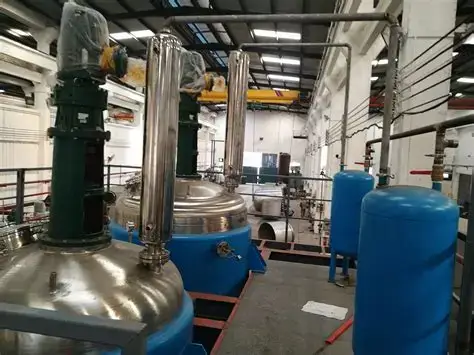
Most chemical reactions are temperature-dependent according to Arrhenius behavior, meaning reaction rate increases exponentially with temperature. This creates both opportunity and risk—it’s a double-edged sword that needs careful handling.
k = A × exp(−Ea/RT)Where:
• k = Reaction rate constant
• A = Pre-exponential factor
• Ea = Activation energy (kJ/mol)
• R = Gas constant (8.314 J/mol·K)
• T = Absolute temperature (K)Temperature Sensitivity: A 10°C increase typically doubles to triples reaction rate (Q10 ≈ 2–3)
On one hand, higher temperatures can improve reaction speed and throughput. On the other, they can accelerate unwanted side reactions or destabilize intermediate compounds. In highly exothermic reactions, heat generation can increase faster than it is removed, creating a positive feedback loop that leads to thermal runaway—basically a chemical reaction that decides to run away from you.
In industrial practice, reactor systems often operate within tight temperature bands:
| Process Type | Temperature Stability | Typical Range |
|---|---|---|
| Standard chemical processes | ±0.5–1.0°C | Wide range |
| Pharmaceutical synthesis | ±0.1–0.3°C | 20–80°C |
| Polymerization reactions | ±0.5°C | 50–150°C |
| High-value fine chemicals | ±0.1°C | −20 to 100°C |
In extreme cases, such as polymerization or nitration reactions, uncontrolled temperature rise can lead to rapid pressure buildup and safety hazards. This isn’t theoretical—it’s a real concern that keeps process engineers up at night.
Because of this, reactor cooling systems are designed not only for steady-state temperature control but also for transient heat removal capability under worst-case reaction conditions. You need to plan for the worst and hope for the best.
Heat Transfer Behavior in Chemical Reactors
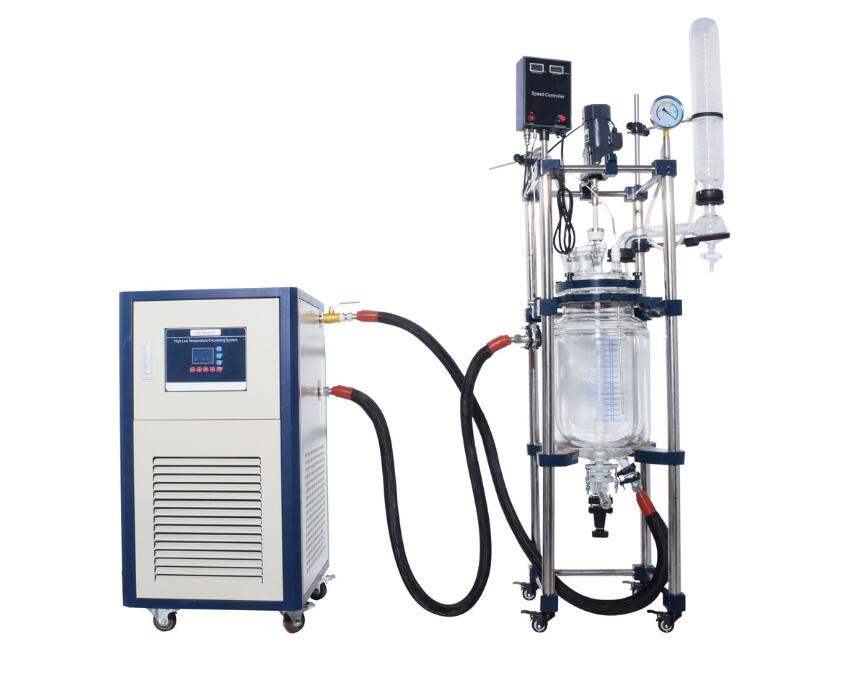
Heat generation in reactors is inherently dynamic. Unlike mechanical systems where heat load is relatively predictable, chemical reactions vary over time depending on concentration, mixing efficiency, catalyst activity, and conversion rate. It’s like trying to cool a stove where the burners keep turning themselves up and down.
In batch reactors, heat generation typically follows a curve: low at the start, increasing sharply during active reaction phases, then tapering off as reactants are consumed. This creates a non-linear thermal load profile that cooling systems must continuously adapt to. The cooling system needs to be smart enough to handle the peaks without overcooling during the valleys.
In continuous stirred-tank reactors (CSTRs), heat generation is more stable but still influenced by feed composition and flow variability. In tubular reactors, heat is often concentrated along axial zones, requiring spatially distributed cooling strategies. Different reactor types, different cooling challenges.
Qgeneration = Qremoval + QaccumulationFor safe operation: Qremoval ≥ Qgeneration × safety factorTypical safety factor: 1.5–2.0× peak heat generation
The key engineering challenge is that heat removal must always exceed peak heat generation, not just average load. This safety margin defines the entire cooling system design philosophy. Average performance doesn’t cut it when you’re dealing with exothermic reactions—you need to be ready for the worst moment.
Core Architecture of Reactor Cooling Systems
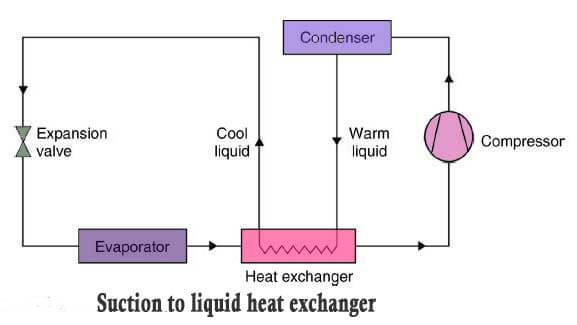
A typical reactor cooling system consists of three tightly coupled subsystems that work together like a well-coordinated team: the refrigeration unit, the heat transfer interface, and the circulation control loop.
The refrigeration unit provides the thermal sink. It removes heat from the secondary fluid loop using a vapor compression cycle consisting of a compressor, condenser, expansion device, and evaporator. In high-performance systems, compressors are often equipped with variable frequency drives (VFDs) to allow dynamic capacity modulation in response to reaction heat load changes. Think of it as cruise control for your cooling system.
The heat transfer interface is where thermal energy is exchanged between the reactor and the cooling medium. This can take the form of a jacketed reactor wall, internal coil, or external heat exchanger loop. Jacket design plays a major role in thermal performance—poor jacket geometry can create dead zones where heat removal is inefficient, leading to localized hot spots inside the reactor. And hot spots are where problems start.
The circulation loop transports heat away from the reactor. This is typically a closed-loop system using thermal fluids such as water, glycol-water mixtures, or specialized heat transfer oils depending on temperature requirements. Pump selection is critical because flow stability directly affects heat transfer coefficient and therefore temperature control accuracy. Unstable flow means unstable temperature—it’s that simple.
Reactor Jacket and Coil Design Considerations
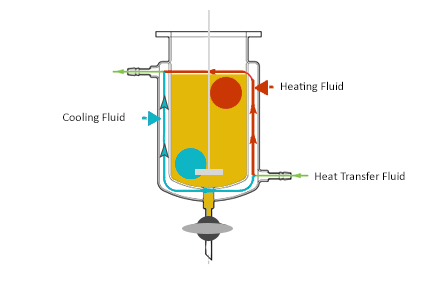
Jacket design is one of the most important factors in reactor cooling performance—get this wrong, and even the best chiller won’t save you.
A simple single-wall jacket provides basic heat transfer but may suffer from uneven flow distribution. In larger reactors, this can result in temperature gradients between the bottom and top regions, which is definitely not what you want in a reaction that needs uniform conditions.
More advanced designs use half-coil or full-coil jackets, where fluid flows through spiral channels around the reactor vessel. This increases turbulence and improves heat transfer efficiency. The trade-off is higher cost and complexity, but for critical reactions, it’s usually worth it.
Some high-end systems use dimple jacket designs, where embossed surface structures create localized turbulence, improving thermal exchange while maintaining structural integrity under pressure. It’s a clever solution that gives you better heat transfer without sacrificing strength.
Internal coils provide even higher heat transfer rates but introduce complexity in cleaning and mixing dynamics. They’re typically used in highly exothermic reactions where maximum heat removal capacity is required—think of them as the heavy artillery of reactor cooling.
| Jacket Type | Heat Transfer Coefficient | Best Application |
|---|---|---|
| Simple jacket | 200–400 W/m²·K | Low heat load, non-critical |
| Half-coil jacket | 400–800 W/m²·K | Medium heat load |
| Full-coil jacket | 500–1000 W/m²·K | High heat load |
| Dimple jacket | 600–1200 W/m²·K | High pressure, high heat |
| Internal coil | 800–1500 W/m²·K | Maximum heat removal |
Key Design Parameters in Reactor Cooling Systems
Several engineering parameters define the performance of a reactor cooling system, and they must be balanced carefully during design. It’s all about finding the sweet spot.
Cooling capacity is the most fundamental parameter, but it must be evaluated under peak reaction load conditions rather than nominal operation. Undersized systems can lead to temperature overshoot during reaction surges, while oversized systems may suffer from poor control stability. Goldilocks principle applies here—not too big, not too small.
Flow rate directly influences heat transfer efficiency. Higher flow rates improve heat removal but also increase pump energy consumption and may reduce residence time effectiveness in some configurations. The goal is to maintain optimal turbulence without introducing hydraulic instability.
Temperature stability is critical for reaction consistency. In many industrial systems, maintaining ±0.5°C stability is considered standard, while high-precision chemical or pharmaceutical processes may require tighter control within ±0.1–0.3°C.
Response time is often overlooked but extremely important. The system must react quickly to sudden changes in heat generation. Slow response can result in thermal overshoot, which may push the reaction outside its optimal window before correction occurs. Basically, you need a system that can keep up with your reaction, not one that’s always playing catch-up.
Air-Cooled vs Water-Cooled Reactor Chillers
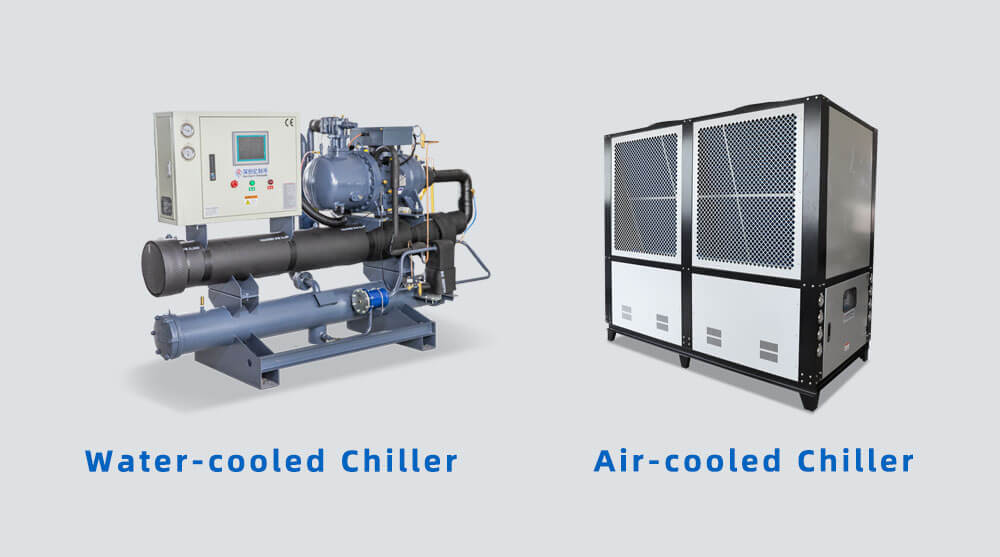
Reactor cooling systems typically rely on either air-cooled or water-cooled chiller configurations, depending on scale and process requirements.
| Item | Air-Cooled Chiller | Water-Cooled Chiller |
|---|---|---|
| Installation | Simple, no water infrastructure | Requires cooling tower or dry cooler |
| Ambient Sensitivity | High (5–8% capacity loss per 10°C) | Low (2–3% per 10°C rise) |
| Energy Efficiency (COP) | 3.0–4.5 | 4.0–6.0 |
| Temperature Stability | Good (±0.3–0.5°C) | Excellent (±0.1–0.3°C) |
| Best For | Laboratory, small production | Large industrial plants |
| Operating Cost | Higher in hot climates | Lower for continuous operation |
Air-cooled systems reject heat directly to ambient air using finned condensers and fans. They’re simpler to install and don’t require external water infrastructure, making them suitable for laboratory-scale or small production reactors. However, their performance is highly dependent on ambient conditions, which can affect temperature stability in high-load operations. On a hot summer day, you’ll definitely notice the difference.
Water-cooled systems use a secondary water loop connected to cooling towers or dry coolers. Because water has significantly higher heat capacity and thermal conductivity than air, these systems offer better efficiency and more stable performance under continuous industrial loads. In large-scale chemical plants or continuous production facilities, water-cooled systems are generally preferred—they’re the heavy-duty option that doesn’t break a sweat.
Safety Design in Reactor Cooling Systems
Safety is a core design constraint in reactor cooling systems, not an optional feature you can add later. This is where cutting corners can have serious consequences.
The most critical safety function is preventing thermal runaway. This requires not only sufficient cooling capacity but also redundancy in system design. Many industrial systems are designed with N+1 redundancy, meaning that one cooling unit can fail without compromising overall thermal control. It’s like having a spare tire—you hope you never need it, but you’re glad it’s there.
Temperature monitoring is typically implemented using multiple sensors distributed across the reactor system. This allows detection of localized hot spots rather than relying on a single average temperature reading. One sensor can miss a problem; multiple sensors give you the full picture.
In high-risk chemical processes, emergency cooling systems may be integrated to rapidly remove heat in case of abnormal reaction behavior. These systems operate independently of the main control loop and are designed for rapid activation. Think of them as the emergency brake for your reactor.
Pressure control is also essential because excessive heat can lead to vapor formation and pressure buildup inside the reactor. Cooling system design must therefore consider both thermal and pressure stability. Temperature and pressure are two sides of the same coin in reactor safety.
Energy Efficiency and Process Optimization
Modern reactor cooling systems are increasingly designed with energy efficiency in mind, especially in continuous production environments where systems operate 24/7. The energy bills add up fast when you’re running around the clock.
Variable frequency compressors allow cooling capacity to match real-time reaction load, reducing energy waste during low-demand periods. Instead of running full blast all the time, the system scales up and down as needed. Intelligent control systems can also adjust pump speeds and flow rates to optimize heat transfer efficiency while minimizing power consumption.
Heat recovery is another emerging trend, where waste heat from reactors is reused in other parts of the production process, such as preheating feedstock or supporting auxiliary heating systems. It’s about making the most of the energy you’ve already paid for.
System Integration in Industrial Plants
In large chemical or pharmaceutical plants, reactor cooling systems are rarely standalone units. They are typically integrated into a centralized utility system that supplies multiple reactors and process units.
This centralized architecture allows better load balancing, improved energy efficiency, and simplified maintenance. Instead of maintaining dozens of individual chillers, you have a central plant that can be optimized as a whole. However, it also requires careful hydraulic design to ensure stable distribution of cooling capacity across multiple reactors operating under different conditions.
Each reactor may have independent control valves and flow regulation systems, allowing precise temperature control without affecting other units in the network. It’s like having individual thermostats in different rooms of a house—all connected to the same central HVAC system.
Conclusion
Reactor cooling system design is fundamentally a problem of controlled heat removal under dynamic and often unpredictable thermal loads. It’s part engineering, part art, and a whole lot of careful planning.
Effective systems must balance cooling capacity, flow stability, response speed, and safety redundancy. Air-cooled systems offer simplicity for smaller-scale applications where flexibility matters more than absolute efficiency. Water-cooled systems provide superior stability and efficiency for industrial-scale operations where reliability is paramount.
Ultimately, the best reactor cooling system isn’t defined by hardware alone, but by how well it integrates thermal engineering principles with chemical process behavior. The most successful designs are those that maintain stable reaction environments under all operating conditions, ensuring both product quality and operational safety. Because at the end of the day, a cooling system that keeps your reaction where it needs to be is worth its weight in gold.
