

 Refrigerador portátil
 Chiller Resfriado a Ar
 Chiller resfriado a água
 Chiller de baixa temperatura
 Chiller industrial personalizado


Na fabricação de bebidas, o controle de temperatura afeta diretamente a qualidade do produto, a consistência do sabor, a estabilidade da carbonatação, a segurança microbiana e a eficiência da produção. Seja na produção de água engarrafada, refrigerantes gaseificados, sucos de frutas, bebidas lácteas, bebidas energéticas ou bebidas funcionais sem álcool, manter temperaturas de processo estáveis é essencial durante todo o ciclo de produção – basicamente, se a temperatura estiver baixa, todo o lote poderá ser comprometido.
Ao contrário das aplicações de refrigeração industrial padrão, a produção de bebidas requer sistemas de refrigeração que combinem:
- Controle de temperatura estável (±0,5°C ou melhor na maioria dos casos)
- Design higiênico de qualidade alimentar que atende aos padrões regulatórios
- Capacidade de operação contínua 24 horas por dia, 7 dias por semana
- Desempenho com eficiência energética para manter os custos operacionais baixos
- Integração confiável de processos com linhas de produção existentes
Nas fábricas de bebidas modernas, os chillers industriais não são apenas dispositivos auxiliares de resfriamento colocados em um canto – eles são uma parte integrada do próprio processo de produção.
Por que o resfriamento é fundamental na fabricação de bebidas
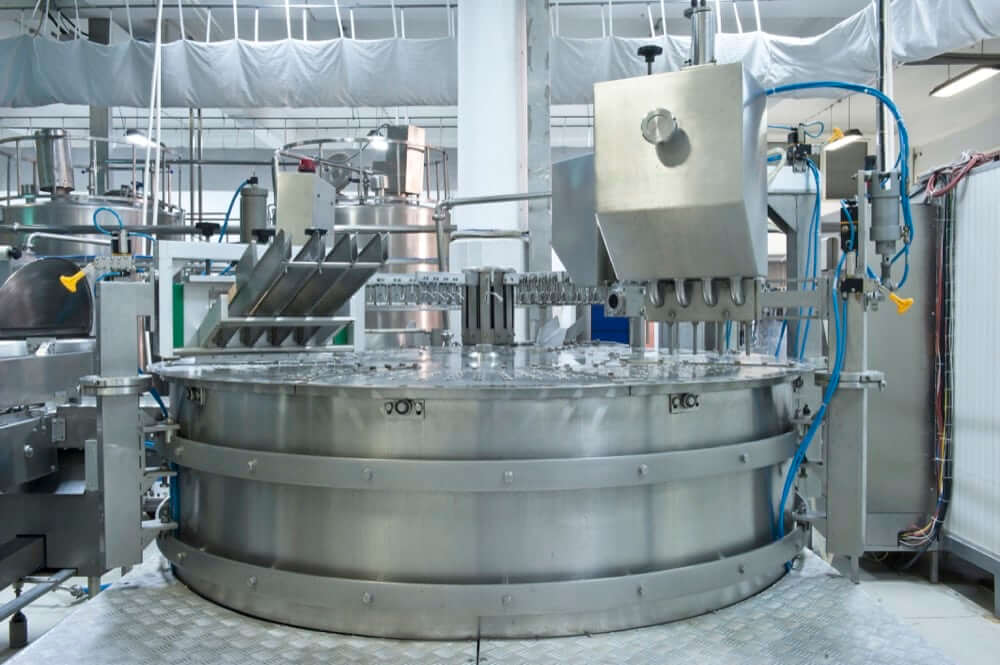
O calor é introduzido na produção de bebidas em vários estágios, incluindo mistura de ingredientes, pasteurização, fermentação, carbonatação, enchimento e sistemas de limpeza CIP. Cada estágio tem sua própria personalidade térmica, por assim dizer, e o resfriamento instável pode afetar diretamente a consistência e a segurança do produto.
Problemas comuns relacionados à temperatura
É aqui que as coisas ficam complicadas. Se o resfriamento não for perfeito:
- Sistemas de carbonatação: O líquido mais quente reduz a solubilidade do CO₂, o que significa bebidas sem gás e níveis inconsistentes de carbonatação que os clientes definitivamente não vão adorar
- Bebidas lácteas: A temperatura excessiva pode acelerar a degradação das proteínas, causando aquele gosto desagradável de “estragar” antes do prazo de validade
- Processamento de suco: O resfriamento instável pode aumentar a oxidação e a perda de sabor – basicamente, o sabor fresco desaparece mais rápido do que deveria
- Pasteurização: O pós-resfriamento insuficiente pode aumentar o risco microbiano, que é uma questão de segurança com a qual ninguém quer lidar
Estabilidade da temperatura do processo: ±0,5°C
Algumas aplicações de fermentação ou carbonatação podem exigir um controle mais rígido, até ±0,2°C.
Principais processos de resfriamento na produção de bebidas
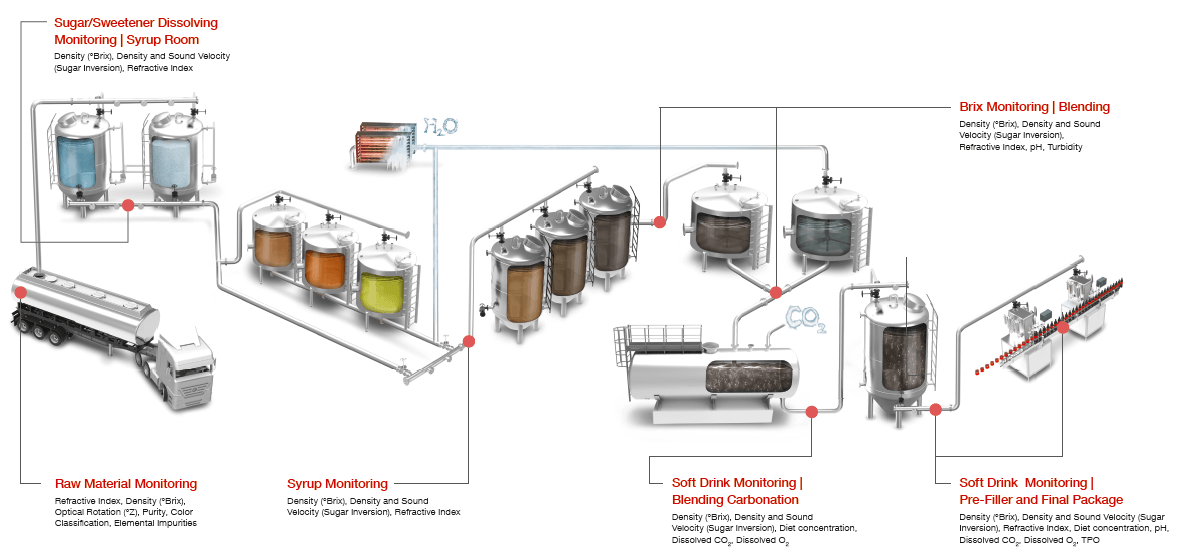
A fabricação de bebidas normalmente envolve vários estágios de resfriamento independentes, mas interconectados, como uma espécie de dança bem coreografada, onde cada dançarino precisa atingir sua marca.
Visão geral do resfriamento de processo
| Estágio de produção | Requisito térmico principal | Objetivo de resfriamento |
|---|---|---|
| Mistura de ingredientes | Estabilização de temperatura | Manter a consistência da formulação |
| Resfriamento de pasteurização | Remoção rápida de calor | Prevenir o crescimento microbiano |
| Fermentação | Remoção contínua de calor | Estabilizar a atividade da levedura |
| Carbonatação | Controle preciso de baixa temperatura | Melhorar a solubilidade do CO₂ |
| Linha de enchimento | Estabilidade de temperatura do equipamento | Manter a continuidade da produção |
| Sistema CIP | Suporte para ciclismo térmico | Eficiência de limpeza |
Cada estágio se comporta termicamente de maneira diferente, razão pela qual os sistemas de resfriamento de bebidas são geralmente projetados como sistemas de gerenciamento térmico multizona em vez de soluções de resfriamento de ponto único e de tamanho único.
Resfriamento após pasteurização
Uma das etapas mais críticas do resfriamento acontece logo após a pasteurização ou tratamento térmico. É aqui que você precisa agir rápido – pense nisso como se estivesse se refrescando depois de um treino.
Após o aquecimento, a bebida deve ser resfriada rapidamente para:
- Evite qualquer atividade microbiana persistente
- Proteja esses delicados compostos de sabor
- Reduza a oxidação que pode estragar o sabor
- Prepare-o para processamento downstream
Se o resfriamento for muito lento, você enfrentará problemas como redução da estabilidade de armazenamento, comprometimento do sabor do produto, perda de propriedades nutricionais e problemas de higiene do processo. Nobody wants that.
Os trocadores de calor de placas combinados com chillers industriais são a solução ideal aqui porque oferecem rápida transferência de calor, estrutura compacta, temperaturas de saída estáveis e operação higiênica – todos os requisitos que você precisa verificar.
Sistemas de resfriamento de fermentação
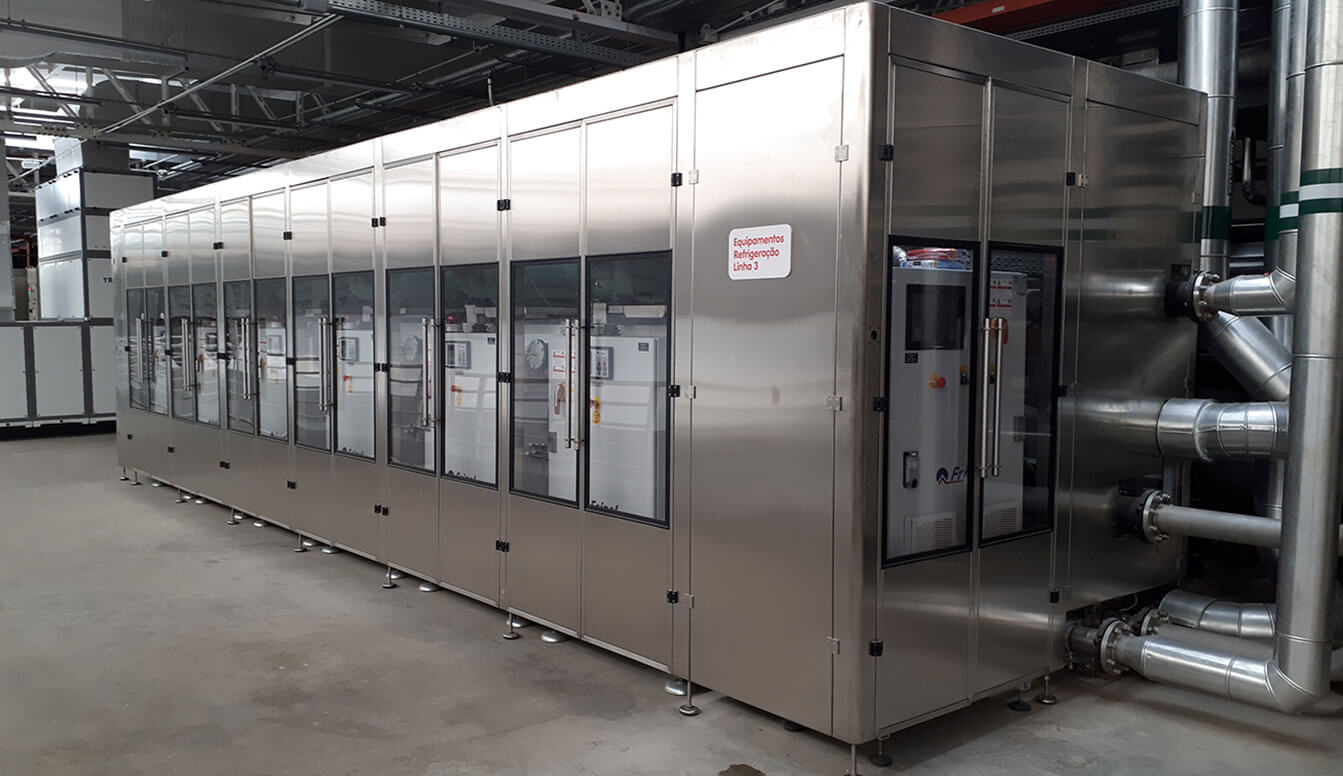
A fermentação gera calor metabólico contínuo à medida que a levedura converte açúcares em álcool ou outros subprodutos. Este é um processo exotérmico, portanto, sem o resfriamento adequado, as coisas podem sair do controle rapidamente.
Sem resfriamento adequado:
- A temperatura de fermentação começa a subir
- A atividade do fermento torna-se errática e imprevisível
- Sabores estranhos podem se desenvolver - definitivamente não é o sabor que você procurava
- A consistência do produto sai pela janela
Requisitos típicos de temperatura de fermentação
| Tipo de bebida | Temperatura Típica de Fermentação | Estabilidade necessária |
|---|---|---|
| Cerveja (cervejas) | 18–22°C | ±0,5°C |
| Cerveja (lager) | 8–12°C | ±0,3°C |
| Kombuchá | 22–30°C | ±1,0°C |
| Bebidas Fermentadas Funcionais | 20–28°C | ±0,5°C |
| Fermentação láctea (iogurte) | 35–45°C | ±0,5°C |
Calor metabólico típico: 70–120 W por 10⁹ células/L
Um tanque de fermentação de 100 HL pode gerar 50–100 kW de calor durante o pico da atividade de fermentação.
Os resfriadores industriais mantêm condições de fermentação estáveis circulando glicol ou água gelada através de tanques encamisados, trocadores de calor de placas e circuitos de resfriamento externos. Em aplicações de fermentação, a estabilidade da temperatura é muitas vezes mais importante do que a capacidade máxima de resfriamento- você quer constante, não necessariamente superfrio.
Controle de carbonatação e solubilidade de CO₂
Os sistemas de carbonatação são supersensíveis à temperatura porque a solubilidade do gás muda diretamente com a temperatura. Isso é regido pela Lei de Henry e é muito importante para obter aquela efervescência perfeita.
C = kH × P
Onde: C = concentração de gás dissolvido, kH = constante de Henry, P = pressão parcial A solubilidade do CO₂ diminui aproximadamente 3–4% por aumento de 1°C na temperatura do líquido.
À medida que a temperatura do líquido aumenta:
- O CO₂ se dissolve com menos eficiência – você está basicamente lutando contra a física
- A consistência da carbonatação diminui entre lotes
- A geração de espuma aumenta durante o enchimento, causando desperdícios e dores de cabeça
A relação entre temperatura e solubilidade do gás é particularmente importante na produção de refrigerantes, bebidas gaseificadas e bebidas carbonatadas funcionais. Manter a bebida em temperaturas mais baixas durante a carbonatação melhora a eficiência e reduz o consumo de CO₂ – bom para a qualidade e bom para os resultados financeiros.
Como funcionam os resfriadores industriais em fábricas de bebidas
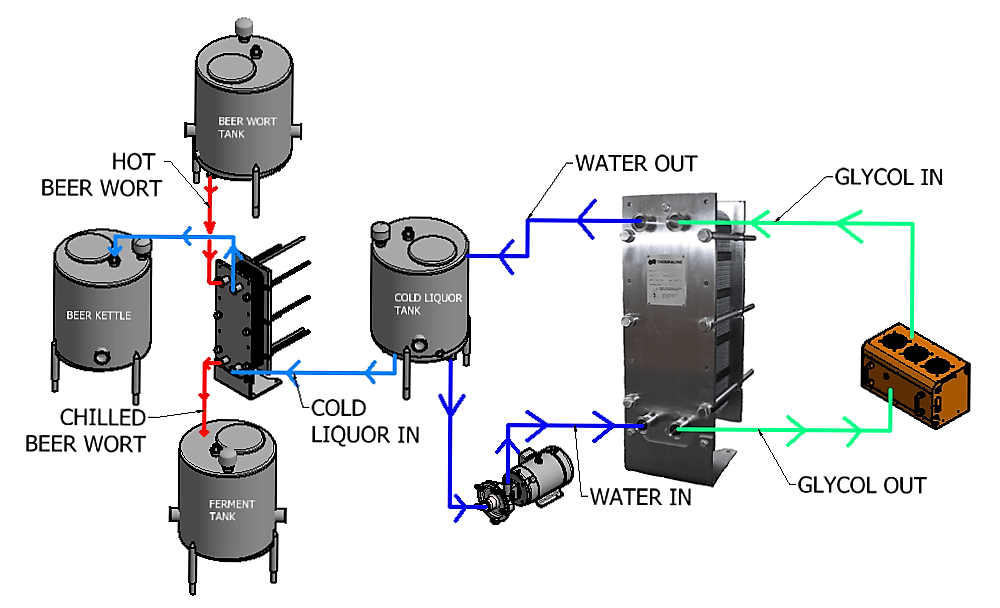
Os resfriadores industriais removem o calor por meio de um sistema de refrigeração em circuito fechado. A ideia básica é bastante simples: absorver o calor do processo, rejeitá-lo em outro lugar e repetir.
O sistema normalmente inclui:
- Compressor: O coração do sistema que impulsiona o ciclo de refrigeração
- Condensador: Onde o calor é rejeitado para o meio ambiente (ar ou água)
- Válvula de expansão: Controla o fluxo de refrigerante no evaporador
- Evaporador: Absorve o calor da água gelada ou da solução de glicol
- Bomba de circulação: Fornece fluido com temperatura controlada para equipamentos de produção
- Sistema de controle inteligente: Mantém tudo funcionando perfeitamente e com precisão
Meios de resfriamento comuns na produção de bebidas
Comparação de fluidos de resfriamento
| Meio de resfriamento | Faixa de temperatura | Vantagens | Aplicação Típica |
|---|---|---|---|
| Água gelada | 5–15°C | Alta eficiência de transferência de calor, baixo custo | Refrigeração geral de bebidas |
| Mistura de Água-Glicol (20%) | -5 a 10°C | Proteção contra congelamento, viscosidade estável | Fermentação a baixa temperatura |
| Glicol de qualidade alimentar (30–40%) | -15 a 5°C | Seguro para ambientes alimentares, anticongelante | Resfriamento do processo de bebidas |
| Sistemas secundários de salmoura | -20 a 0°C | Baixas temperaturas muito estáveis | Aplicações criogênicas especializadas |
Os sistemas à base de glicol são amplamente utilizados em fábricas de bebidas porque evitam o congelamento (essencial para tanques externos no inverno), melhoram a estabilidade em baixas temperaturas, suportam sistemas de tubulação longos sem problemas de fluxo e reduzem os riscos operacionais sazonais. Essencialmente, eles proporcionam tranquilidade o ano todo.
Resfriadores de bebidas resfriados a água versus resfriadores a ar
Os resfriadores industriais usados em fábricas de bebidas geralmente vêm em dois sabores: resfriados a água e resfriados a ar. Cada um tem seu lugar dependendo da sua configuração.
Tabela de comparação
| Item | Chiller resfriado a água | Chiller Resfriado a Ar |
|---|---|---|
| Eficiência Energética (COP) | 4,0–6,0 (superior) | 3,0–4,5 (moderado) |
| Estabilidade da temperatura | Excelente (±0,1–0,3°C) | Bom (±0,3–0,5°C) |
| Complexidade de instalação | Superior (precisa de torre de resfriamento) | Inferior (plug and play) |
| Sensibilidade à temperatura ambiente | Baixo (2–3% por 10°C) | Alto (5–8% por 10°C) |
| Custo operacional de longo prazo | Mais baixo | Maior em condições quentes |
| Melhor Aplicação | Grande produção contínua | Instalações pequenas e médias |
Chillers resfriados a água em grandes fábricas de bebidas
Grandes fábricas de engarrafamento e instalações centralizadas de produção de bebidas normalmente preferem resfriadores resfriados a água porque oferecem melhor estabilidade térmica, temperaturas de condensação mais baixas, maior eficiência operacional e maior confiabilidade 24 horas por dia, 7 dias por semana.
A água tem condutividade térmica significativamente maior (~0,6 W/m·K) e capacidade de calor (~4,18 kJ/kg·K) em comparação com o ar, permitindo uma rejeição de calor mais rápida, menor pressão de descarga do compressor e operação mais estável sob cargas flutuantes. Pense nisso como a diferença entre se refrescar em uma piscina e no ar quente.
Os sistemas refrigerados a água são especialmente adequados para:
- Instalações de fermentação com geração contínua de calor
- Fábricas de engarrafamento multilinhas funcionando 24 horas por dia
- Grandes sistemas de carbonatação que exigem controle preciso
- Linhas de pasteurização contínua
Chillers resfriados a ar para produção flexível de bebidas
Os chillers resfriados a ar são o carro-chefe de operações menores. Eles são comumente encontrados em:
- Pequenas fábricas de bebidas com necessidades moderadas de refrigeração
- Linhas de produção piloto para desenvolvimento de novos produtos
- Produção de bebidas artesanais (cervejarias, cidras, etc.)
- Aplicações de refrigeração descentralizadas
As vantagens incluem instalação mais fácil, menor custo de infraestrutura, manutenção simplificada e ausência de necessidade de torre de resfriamento. Basicamente, menos complexidade e configuração mais rápida.
No entanto, o desempenho depende da temperatura ambiente. Em climas quentes:
- A temperatura de condensação aumenta
- O compressor tem que trabalhar mais
- A eficiência energética cai
- A estabilidade do resfriamento pode ser prejudicada
Por esse motivo, os sistemas refrigerados a ar são geralmente recomendados para cargas de resfriamento moderadas ou instalações com cronogramas de produção flexíveis – locais onde você não precisa daquele desempenho implacável e consistente, independentemente do clima lá fora.
Requisitos de projeto higiênico em sistemas de resfriamento de bebidas
As aplicações de alimentos e bebidas exigem padrões de higiene mais rígidos do que o resfriamento industrial geral. Isso não é opcional – é regulamentado e por um bom motivo.
Recursos comuns de design higiênico
| Recurso | Especificação | Propósito |
|---|---|---|
| Aço Inoxidável 316L | Para superfícies de contato com o produto | Evitar corrosão e contaminação |
| Projeto de circuito fechado | Sem exposição ao meio ambiente | Proteja a limpeza do líquido refrigerante |
| Glicol de qualidade alimentar | Formulações em conformidade com a FDA | Operação segura perto de linhas de produtos |
| Tubulação compatível com CIP | Acessórios sanitários, sem pernas mortas | Simplifique os procedimentos de limpeza |
| Superfícies internas lisas | Ra < 0,8 μm (padrão sanitário) | Reduza o risco de crescimento bacteriano |
Esses fatores de projeto ajudam a manter a segurança alimentar, atender aos requisitos regulamentares e manter a produção confiável. Poupar no design higiênico é uma aposta que raramente compensa.
Controle preciso de temperatura na fabricação de bebidas
A produção moderna de bebidas muitas vezes requer controle térmico estável em diversas zonas de processo simultaneamente, como reger uma orquestra em que cada seção precisa tocar exatamente no momento certo.
Diferentes sistemas podem precisar de resfriamento de fermentação em baixa temperatura, resfriamento moderado de carbonatação, resfriamento rápido pós-pasteurização e operação estável da linha de enchimento, tudo ao mesmo tempo.
Para obter controle estável sob condições de carga dinâmica, os chillers modernos geralmente usam:
- Compressores inversores: Ajuste a capacidade suavemente em vez de ligar e desligar
- Válvulas de expansão eletrônica: Medição precisa de refrigerante para desempenho consistente
- Bombas de frequência variável: Combine o fluxo com a demanda real
- Sistemas de controle PID multizona: Controle de temperatura independente para cada zona de produção
Essas tecnologias ajudam a minimizar o excesso de temperatura, a oscilação térmica, o desperdício de energia e a inconsistência do produto – os quatro cavaleiros dos problemas de qualidade das bebidas.
Eficiência Energética em Sistemas de Resfriamento de Bebidas
Os sistemas de refrigeração estão frequentemente entre os maiores consumidores de energia nas fábricas de bebidas, por vezes representando 20-40% do consumo total de energia das instalações. Fazer isso direito é importante – e muito.
Tecnologias de otimização de energia
| Tecnologia | Economia de energia típica | Benefício principal |
|---|---|---|
| Compressores Inversores | 20–35% em carga parcial | Consumo reduzido de energia em carga parcial |
| Controle Inteligente de Bomba | 30–50% de energia da bomba | Eficiência hidráulica melhorada |
| Recuperação de calor | 10–30% dos custos de aquecimento | Reutilizar o calor residual para aquecimento de instalações |
| Lógica de controle adaptativo | 5–15% geral | Melhor resposta de carga e estabilidade |
| Trocadores de calor de alta eficiência | 5–10% | Menor perda de energia, transferência de calor mais rápida |
Em grandes instalações de bebidas que operam continuamente, a otimização energética pode reduzir significativamente os custos operacionais – muitas vezes pagando por atualizações do sistema dentro de 2 a 3 anos.
Sistemas de resfriamento centralizado em fábricas de bebidas
A maioria das fábricas de bebidas modernas utiliza uma arquitetura de refrigeração centralizada. Pense nisso como uma planta de resfriamento poderosa que atende toda a instalação, em vez de unidades menores espalhadas por toda parte.
Uma planta central de resfriamento fornece fluido resfriado para tanques de fermentação, sistemas de carbonatação, linhas de enchimento, sistemas de pasteurização e equipamentos de embalagem – tudo a partir de um único centro eficiente.
As vantagens do resfriamento centralizado incluem melhor eficiência energética por meio de escala, manutenção mais fácil, pois tudo está em um só lugar, expansão flexível da capacidade quando você precisa crescer e melhor coordenação de processos em zonas de produção. Diferentes zonas de produção também podem operar em diferentes pontos de ajuste de temperatura simultaneamente através de circuitos de controle independentes – sem conflitos, sem concessões.
Conclusão
Os resfriadores industriais são uma parte crítica da fabricação de bebidas – eles influenciam diretamente a qualidade do produto, a consistência do sabor, a segurança microbiana e a eficiência da produção. Acertar o resfriamento não é opcional; é fundamental para administrar uma operação de bebidas bem-sucedida.
Chillers refrigerados a água fornecem eficiência superior e estabilidade térmica para grandes fábricas de bebidas de produção contínua – pense em grandes instalações de engarrafamento funcionando 24 horas por dia, 7 dias por semana. Sistemas refrigerados a ar oferecem instalação mais simples e operação flexível para instalações menores e linhas de produção descentralizadas – cervejarias artesanais, laticínios regionais, esse tipo de configuração.
Mais importante ainda, o resfriamento de bebidas não envolve apenas a remoção de calor. É uma função de controle de processo de precisão que mantém condições térmicas estáveis em todas as etapas da produção, desde a mistura de ingredientes até o enchimento de garrafas e a limpeza posterior dos tanques.
À medida que a fabricação de bebidas continua avançando em direção a uma maior automação, padrões de qualidade mais rígidos e maior eficiência energética, os resfriadores industriais continuarão sendo uma parte essencial dos sistemas de produção de bebidas confiáveis e consistentes. A tecnologia está cada vez melhor e a procura por qualidade continua a crescer – é uma equação que funciona.
