

 Tragbarer Kühler
 Luftgekühlter Chiller
 Wassergekühlter Kühler
 Niedertemperaturkühler
 Kundenspezifischer Industriekühler


Bei der Leiterplattenherstellung wirkt sich die Temperaturkontrolle direkt auf die Produktqualität, die Prozessstabilität und die Produktionseffizienz aus. Im Gegensatz zu allgemeinen industriellen Kühlanwendungen umfasst die Leiterplattenproduktion mehrere gleichzeitig ablaufende wärmeempfindliche Prozesse, darunter CNC-Bohren, Galvanisieren, Ätzen, Laminieren, Belichten und AOI-Inspektion. Jeder Prozess hat unterschiedliche thermische Eigenschaften, Lastschwankungen und Temperaturstabilitätsanforderungen.
Die Herausforderung des Wärmemanagements bei der Leiterplattenherstellung ist gekennzeichnet durch: Mehrpunkt-Thermokopplung, wo benachbarte Prozessanlagen die thermische Umgebung gegenseitig beeinflussen können. Diese räumliche thermische Wechselwirkung erfordert ein sorgfältiges Design auf Systemebene und keine isolierten Kühllösungen auf Geräteebene.
Aus diesem Grund sind Leiterplattenkühlsysteme nicht nur darauf ausgelegt, Wärme abzuleiten. Ihr eigentlicher Zweck besteht darin, während des gesamten Produktionsprozesses ein stabiles thermisches Umfeld aufrechtzuerhalten und so beides auszugleichen stationäre thermische Belastungen Und vorübergehende thermische Störungen.
Bei der modernen Leiterplatten- und HDI-Herstellung mit hoher Dichte können selbst kleine Temperaturschwankungen zu Maßabweichungen (typischerweise ±0,02 mm Toleranz für HDI-Platinen), ungleichmäßiger Kupferabscheidung, Problemen mit der Signalintegrität oder Fehlern bei der Ausrichtung mehrerer Schichten führen. Da die Leiterplattendichte und die Signalfrequenz weiter zunehmen, werden Kühlsysteme zu einem Teil der Prozesstechnik selbst und nicht mehr zu Hilfsanlagen in der Fabrik.
Thermische Eigenschaften von Leiterplattenherstellungsprozessen
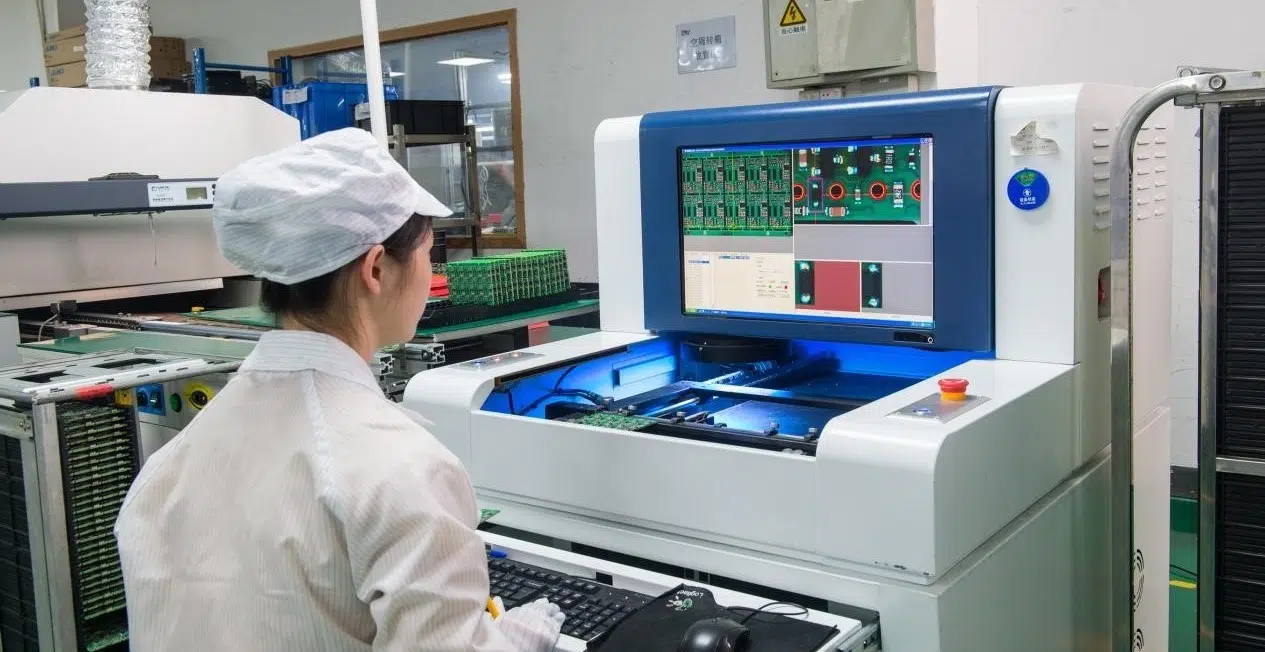
In den verschiedenen Phasen der Leiterplattenproduktion entsteht Wärme auf unterschiedliche Weise. Das Verständnis dieser thermischen Verhaltensweisen – einschließlich Wärmeerzeugungsmechanismen, thermischer Zeitkonstanten und zulässiger Temperaturbänder – ist die Grundlage für die Auswahl der richtigen Kühllösung.
| PCB-Prozess | Hauptwärmequelle | Kühlziel | Typische Wärmebelastung | Temperaturempfindlichkeit | Zulässige Variation |
|---|---|---|---|---|---|
| CNC-Bohren | Spindelreibung, Bit-Substrat-Schnittstelle | Reduzieren Sie die Wärmeausdehnung | 1,5–4,0 kW pro Spindel | Sehr hoch | ±0,5°C |
| Galvanisieren | Faradayscher Widerstand, Joulesche Erwärmung | Stabilisierung der Beschichtungsdicke | 8–25 kW pro Tank (je nach Tankgröße) | Extrem hoch | ±0,2–0,5 °C |
| Radierung | Exotherme chemische Reaktionen, Sprühstoß | Behalten Sie die Reaktionskonsistenz bei | 3–12 kW pro Leitungsabschnitt | Hoch | ±1,0°C |
| Laminierung | Pressplatten, exotherme Aushärtung | Verhindern Sie Plattenverzug und kontrollieren Sie das Aushärtungsprofil | 15–50 kW pro Presse | Hoch | ±2,0°C (Zonengleichmäßigkeit) |
| Laserbohren (CO₂/UV) | Abwärme der Laserquelle, abgetragenes Material | Optik schützen, Neuverguss des Harzes verhindern | 2–8 kW pro Lasereinheit | Sehr hoch | ±0,3°C |
| AOI / Inspektion | Beleuchtungssysteme, Kameras, Prozessoren | Sorgen Sie für die Stabilität des optischen Pfades | 00,5–2,0 kW pro System | Mittel | ±2,0°C |
Thermische Dynamik beim mechanischen Bohren
Bei mechanischen Bohrprozessen überschreiten die Spindelgeschwindigkeiten häufig 100.000 U/min (typischerweise 120.000–200.000 U/min beim Mikrobohren). Durch die Reibung zwischen Bohrern und PCB-Substraten entsteht örtlich begrenzte Wärme an der Schnittstelle zwischen Bohrer und Bohrer. Die Wärmestromdichte kann erreichen 10–50 W/mm² bei aggressiven Bohrzyklen.
Dieser lokalisierte Wärmeeintrag verursacht zwei Hauptprobleme:
-
- Thermomechanischer Stress: Die unterschiedliche Wärmeausdehnung zwischen dem Bohrer (typischerweise Wolframcarbid mit α ≈ 4,9×10⁻⁶/°C) und dem PCB-Substrat (FR-4 mit α ≈ 12–18×10⁻⁶/°C) führt zu Mikrobrüchen an der Lochwand.
- Harzverschmierung**: Erhöhte Temperaturen (normalerweise > 150 °C an der Bohrerspitze) erweichen das Epoxidharz und fließen zurück, wodurch es über den Zylinder und die Wand des Lochs verschmiert und die Integrität der Zylinderwand beeinträchtigt.
Besonders kritisch wird dies bei HDI-Platinen, bei denen es typischerweise zu Mikrovia-Toleranzen kommt ±0,020 mm (20 μm), was eine Temperaturstabilität unter 0,5 °C in der Bohrzone erfordert.
Thermische Elektrochemie beim Plattieren und Ätzen
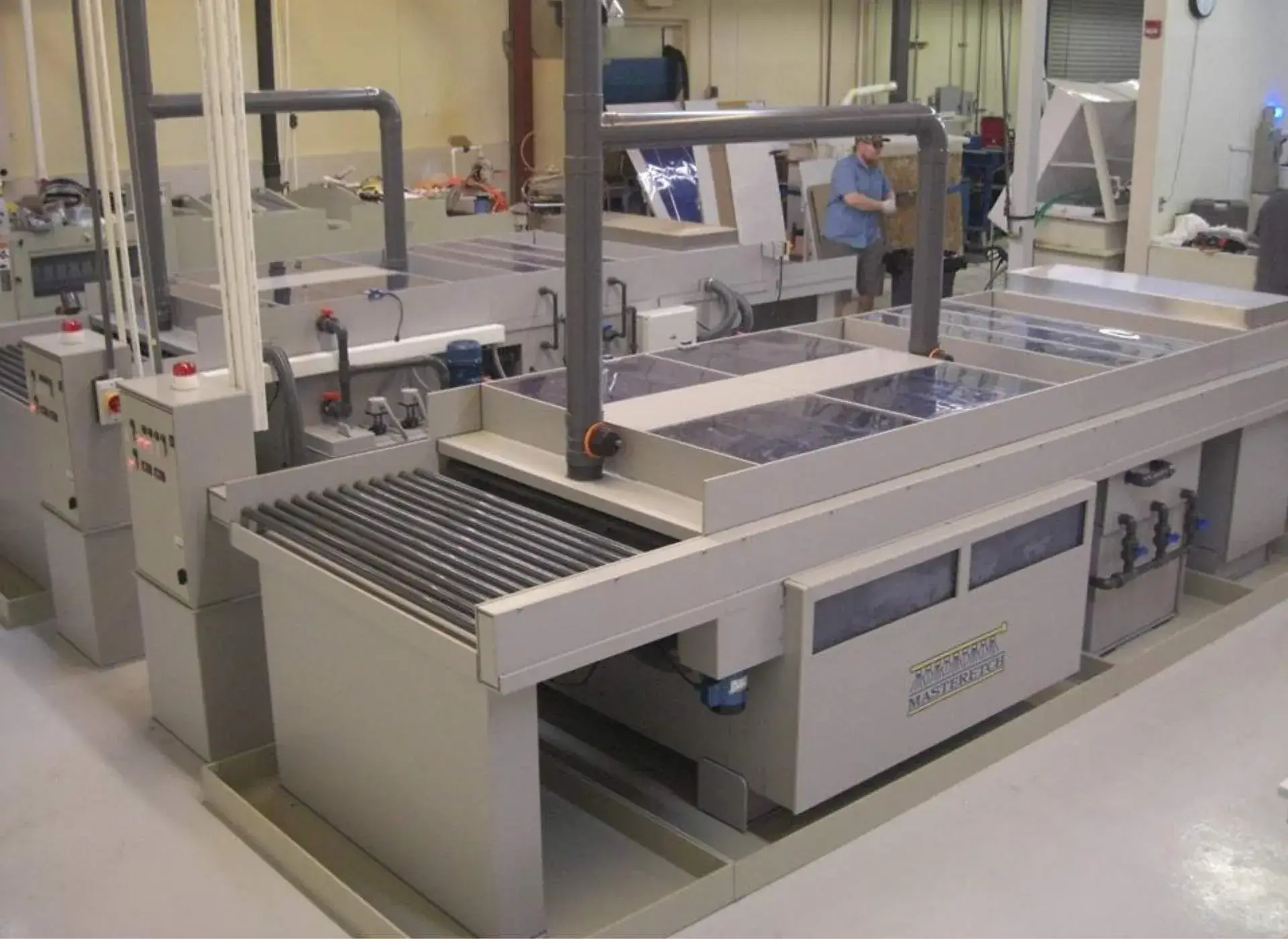
In Galvanik- und Ätzlinien ist das thermische Verhalten eher chemisch bedingt. Die Temperatur hat direkten Einfluss auf:
- Austauschstromdichte: Gemäß der Butler-Volmer-Gleichung hängt die Reaktionskinetik exponentiell von der Temperatur ab (typischerweise 2–3 % pro °C-Anstieg bei der Kupferabscheidung).
- Elektrolytleitfähigkeit: Die Ionenleitfähigkeit steigt um etwa 2 % pro °C-Anstieg
- Diffusionskoeffizient: Die Massentransportraten nehmen mit der Temperatur zu, was sich auf Streuvermögen und Gleichmäßigkeit auswirkt
Zu hohe Temperaturen können die Reaktionsgeschwindigkeit vorübergehend verbessern, verringern jedoch häufig die Konsistenz der Beschichtung und die Prozessstabilität. Für die saure Verkupferung liegt der optimale Temperaturbereich typischerweise bei 22–28°C, mit einer Empfindlichkeit der Abscheidungsrate von ca ±0,05 μm/min pro °C Abweichung.
Thermomechanische Herausforderungen bei der Laminierung
Die Laminierung bringt eine weitere Art thermischer Herausforderung mit sich Glasübergangstemperatur (Tg) des Laminatmaterials. Während des Pressens:
- Das Laminat wird über seine Tg erhitzt (typischerweise 130–180 °C für Materialien mit hoher Tg).
- Der Harzfluss und die Aushärtung im B-Stadium erfolgen innerhalb eines engen Temperaturfensters
- Eine ungleichmäßige Abkühlung nach dem Pressen führt zu Wärmegradienten durch die gesamte Dicke
Es kann zu thermischer Restspannung durch ungleichmäßige Kühlung (normalerweise 5–15 °C Temperaturunterschied über das Panel) kommen Biege- und Verdrehungswerte über 0,5 %Dies führt zu nachgelagerten Registrierungsproblemen bei Bohr- und Bildgebungsprozessen.
Thermodynamik von Kühlsystemen mit geschlossenem Kreislauf
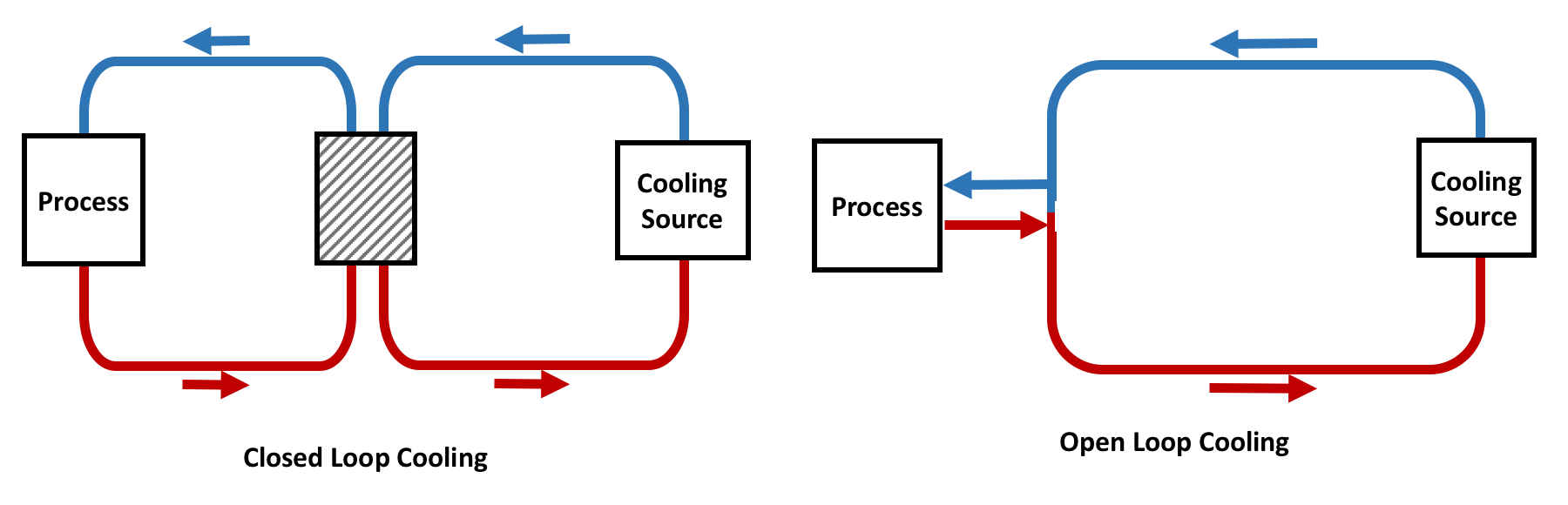
Die meisten modernen Leiterplattenfabriken verwenden Industriekühler mit geschlossenem Kreislauf, da diese eine stabile und isolierte Temperaturkontrolle ermöglichen. Für die ordnungsgemäße Systemspezifikation ist das Verständnis des Dampfkompressionskältekreislaufs von entscheidender Bedeutung.
COP = Qverdunsten / Wkomp = h1 - H4 / H2 - H1Bei typischen PCB-Kühlern liegt der COP je nach Betriebsbedingungen zwischen 3,0 und 6,5.
Analyse des Dampfkompressionszyklus
In einem standardmäßigen Dampfkompressionskühlkreislauf, der in PCB-Kühlern verwendet wird:
- Komprimierung (1→2): Kältemitteldampf mit niedrigem Druck wird auf hohen Druck komprimiert. Bei R-410A-Systemen erhöht sich dadurch typischerweise der Druck von ca. 9 bar (gesättigter Dampf bei 0 °C) auf ca. 26 bar (gesättigter Dampf bei 45 °C).
- Kondensation (2→3): Dampf mit hohem Druck und hoher Temperatur setzt Wärme frei und kondensiert. Die normalerweise aufrechterhaltene Unterkühlung beträgt 3–8 °C, um sicherzustellen, dass kein Dampf in das Expansionsgerät gelangt.
- Erweiterung (3→4): Flüssiges Kältemittel strömt durch eine Drosselvorrichtung (thermostatisches Expansionsventil oder elektronisches Expansionsventil) und fällt auf niedrigen Druck.
- Verdunstung (4→1): Eine Niederdruck-Flüssigkeits-Dampf-Mischung nimmt Wärme aus dem Prozesswasser auf und verdampft zu gesättigtem Dampf.
| Kältemittel | GWP | Typischer Betriebsdruck (bar) | Volumetrische Kühlleistung |
| R-410a | 2088 | 9–26 (Verdampfung/Verflüssigung) | Hoch (bevorzugt für mittelgroße bis große Systeme) |
| R-134a | 1430 | 3–12 | Moderat (kleinere Systeme) |
| R-513A | 573 | 4–14 | Moderat (Alternative mit niedrigerem GWP) |
| R-1234ze | 1 | 4–13 | Niedriger (zukünftige Option mit niedrigem GWP) |
Vorteile des Closed-Loop-Systems
In einem geschlossenen System:
- Das Prozesswasser zirkuliert unabhängig von der Außenumgebung und verhindert so eine Kontamination durch in der Luft befindliche Partikel und Mikroorganismen
- Der Wärmeaustausch erfolgt über Plattenwärmetauscher mit typischer Wirksamkeit von 85–95 %
- Das Risiko einer Wasserverschmutzung wird durch Filterung und Wasseraufbereitung verringert
- Aufgrund des konstanten Wassermassenflusses und bekannter thermischer Eigenschaften wird die Temperaturkontrolle vorhersehbarer
- Das geschlossene Kreislaufdesign ermöglicht eine präzise Wasserqualitätskontrolle (für Präzisionsanwendungen wird normalerweise ein spezifischer Widerstand von >1 MΩ·cm beibehalten).
Im Vergleich zu offenen Kühlsystemen bieten geschlossene Kühlsysteme Folgendes:
- Bessere Temperaturstabilität (typischerweise ±0,1–0,5 °C gegenüber ±1,0–3,0 °C für offene Systeme)
- Geringere Wartungshäufigkeit (keine Ablagerungen am Treibturm und kein Algenwachstum)
- Reduzierte Ablagerungen und Verunreinigungen in Prozesswärmetauschern
- Längere Gerätelebensdauer durch kontrollierte Wasserchemie
Kernkomponenten eines PCB-Kühlsystems
Kompressor: Dynamische Kühlleistungsregelung
Der Kompressor ist die primäre Energiequelle des Kühlsystems und verbraucht typischerweise Energie 25–40 % der gesamten Kältemaschinenleistung.

| Kompressortyp | Kapazitätsbereich | Teillasteffizienz | Geräuschpegel | Beste Anwendung |
| Scrollen (feste Geschwindigkeit) | 5–50 kW | Schlecht bei <50 % Auslastung | Niedrig | Konstante Belastung, kleine Systeme |
| Scroll (Wechselrichter) | 5–70 kW | Hervorragend (20–100 % Kapazität) | Mäßig | Unterschiedliche Lasten, die meisten PCB-Kühler |
| Schraube (feste Geschwindigkeit) | 50–300 kW | Mäßig | Hoch | Große Konstantlastsysteme |
| Schraube (Wechselrichter/VFD) | 50–500 kW | Exzellent | Hoch | Große Systeme mit variabler Last |
| Zentrifugal | >300 kW | Gut | Mäßig | Sehr große zentrale Pflanzen |
In modernen Leiterplattenanwendungen werden häufig Wechselrichterkompressoren (mit variabler Frequenz) verwendet, da sich die Produktionslasten ständig ändern. Maschinen starten und stoppen häufig, die Beladung der chemischen Bäder schwankt und Bohrsysteme arbeiten intermittierend mit Arbeitszyklen, die typischerweise zwischen 30–80 %.
Kompressoren mit variabler Frequenz ermöglichen dem Kühlsystem:
- Temperaturüberschreitung reduzieren (normalerweise). 0.5°C vs. 2–3°C für Ein/Aus-Steuerung)
- Verbessern Sie die Energieeffizienz (normalerweise 20–35 % Energieeinsparung bei Teillastbedingungen)
- Sorgen Sie für eine stabile Auslasswassertemperatur (normalerweise). ±0,1–0,3 °C Stabilität)
- Geringere zyklische Belastung des Kompressors (reduzierte Startfrequenz um 60–80 %)
Herkömmliche Systeme mit fester Geschwindigkeit und Ein-/Aus-Zyklus haben Probleme bei schwankenden PCB-Produktionslasten und verursachen Folgendes:
- Temperaturschwankungen mit einer Amplitude von 2–5°C
- Anlaufströme des Kompressormotors 5–7× Nennstrom
- Erhöhter mechanischer Verschleiß (typische Verkürzung der Lagerlebensdauer um 30–50 %).
Verdampfer: Stabilität des Wärmeaustauschs
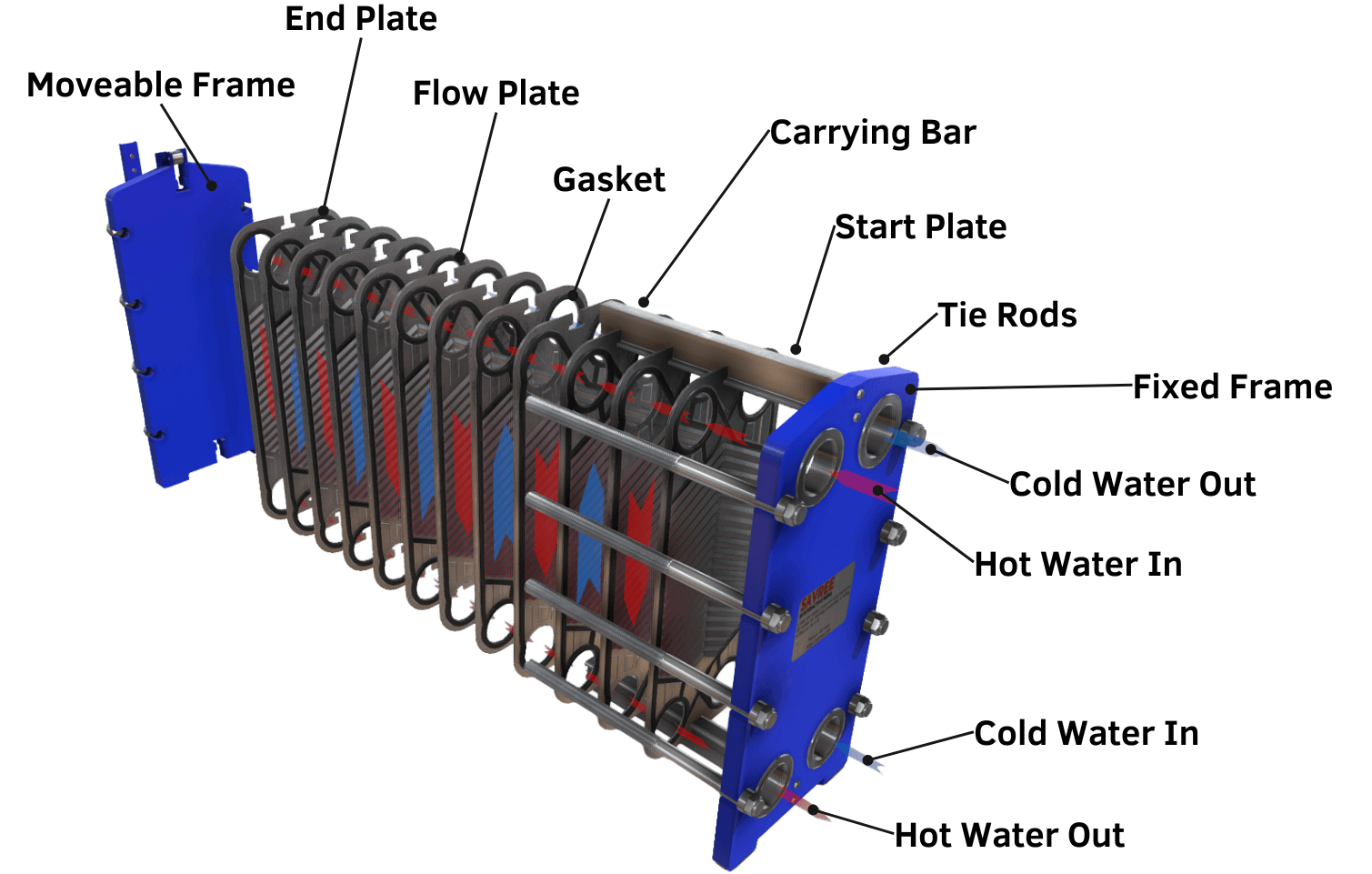
Der Verdampfer überträgt Wärme vom Prozesswasser auf das Kältemittel. Die Wärmeübertragungsrate wird bestimmt durch:
Q = U × A × LMTDWobei:
• Q = Wärmeübertragungsrate (kW)
• U = Gesamtwärmeübergangskoeffizient (kW/m²·K)
• A = Wärmeübertragungsfläche (m²)
• LMTD = Logarithmische mittlere Temperaturdifferenz (°C)
In PCB-Kühlsystemen werden häufig gelötete Plattenverdampfer verwendet, weil sie Folgendes bieten:
- Hohe Wärmeübertragungseffizienz (U-Werte von 3–6 kW/m²·K für R-410A-Verdampfer)
- Kompaktes Design (typischerweise 0,1–0,3 m² pro kW der Kapazität)
- Schnelle thermische Reaktion (typischerweise thermische Zeitkonstante). 30–60 Sekunden)
- Stabile Strömungsverteilung bei richtiger Auslegung
Die Qualität des Verdampferdesigns hat jedoch erheblichen Einfluss auf die Systemstabilität:
| Designfaktor des Verdampfers | Auswirkungen auf die PCB-Kühlung | Technische Spezifikation |
|---|---|---|
| Ungleichmäßige Strömungsverteilung | Lokale Temperaturschwankung (±0,5–2,0 °C Variation) | Druckabfallverhältnis von Anschluss zu Anschluss: 1,0–1,3 |
| Schlechtes Turbulenzdesign | Geringere Wärmeübertragungseffizienz (Reduzierung um 10–30 %) | Reynolds-Zahl: Re > 4000 (turbulent) |
| Hoher Druckabfall | Reduzierte Systemstabilität, erhöhte Pumpleistung | Typisch: 30–100 kPa pro Durchgang |
| Langsame thermische Reaktion | Prozesstemperaturverzögerung (5–15 Sekunden zusätzliche Verzögerung) | Flüssigkeitsvolumen minimieren (<0,5 l pro 10 kW) |
Für die Präzisions-PCB-Herstellung ist die Aufrechterhaltung einer gleichmäßigen Wärmeübertragung über alle Kanäle von entscheidender Bedeutung. Dies erfordert:
- Richtiges Header-Design mit Strömungsdüsen oder Verteiler
- Gegenstromkonfiguration zur Maximierung des LMTD
- Unterkühlungswartung von 3–5°C am Verdampferausgang
- Überhitzungskontrolle von 5–8°C bei Kompressoransaugung
Pumpensystem: Kritische Strömungsdynamik
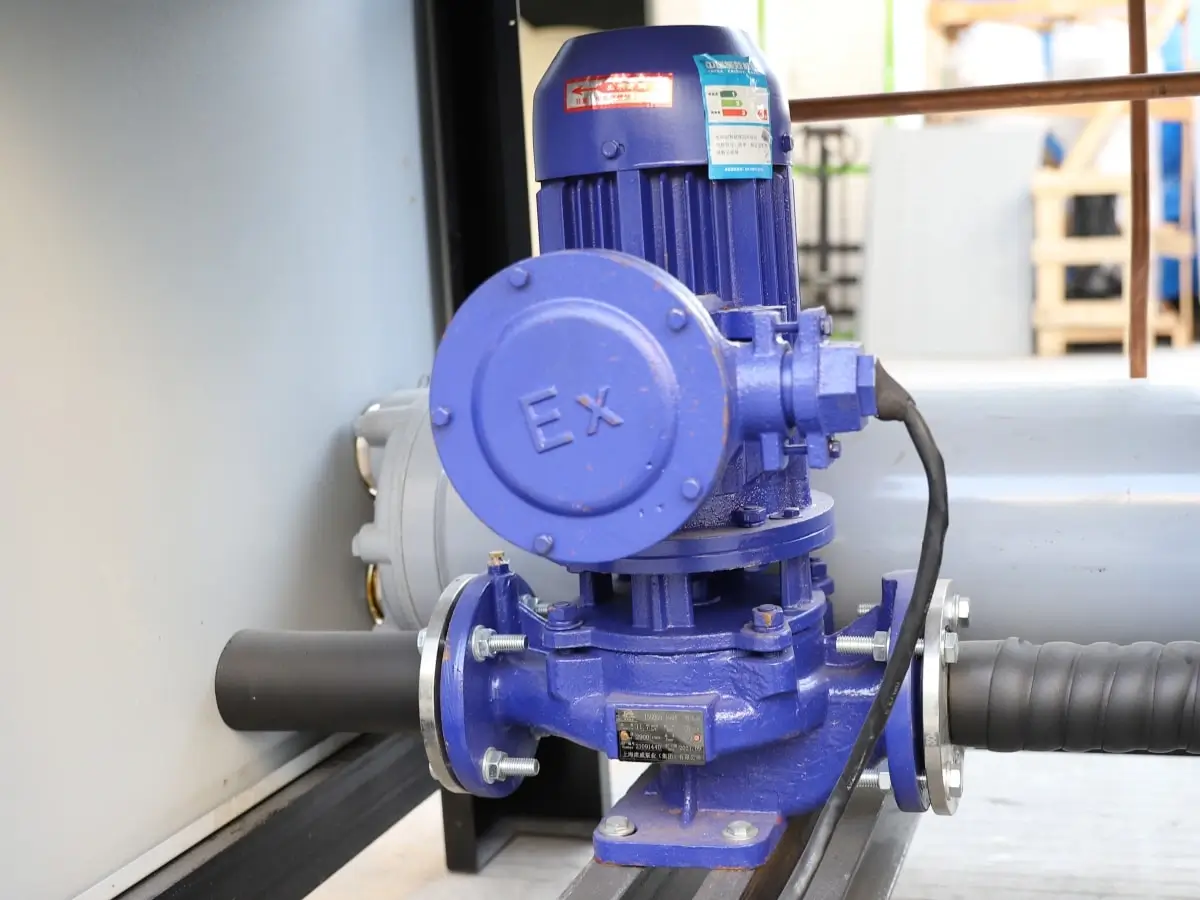
Bei der Leiterplattenherstellung ist ein stabiler Durchfluss fast genauso wichtig wie eine stabile Temperatur. Der Wärmeübergangskoeffizient in Prozessanlagen hängt stark von der Durchflussrate ab:
h = Nu × k / D = C × ReM × PrN × k / DFür turbulente Wasserströmung: h ∝ Re0.8 (etwa)
Dies bedeutet, dass eine Durchflussänderung von 10 % die Wärmeübertragung um ca. 8 % beeinflussen kann.
Selbst wenn die Austrittswassertemperatur konstant bleibt, kann eine instabile Strömung die lokalen Wärmeübertragungskoeffizienten innerhalb der Anlage verändern und zu thermischen Schwingungen auf Prozessebene führen. Besonders problematisch ist dies bei:
- Galvanikbehälter: Ungleichmäßigkeit des Flusses führt zu Schwankungen der Stromdichte, die sich direkt auf die Gleichmäßigkeit der Kupferdicke auswirken (typischerweise Abweichung von ±5–15 % vom Ziel).
- Laserkühlkanäle: Strömungsschwankungen verursachen lokale Hotspots, die teure Laseroptiken beschädigen können
- Spindelkühlmäntel: Eine instabile Strömung führt zu Temperaturgradienten im Werkzeughalter, die die Bohrgenauigkeit beeinträchtigen
Moderne PCB-Kühler verwenden daher üblicherweise:
- Frequenzumrichter (VFD) bei Primärumwälzpumpen: Energieeinsparung von 30–50 % im Teillastbetrieb
- Konstantdruckregelung: Hält den Solldruck am Geräteeinlass unabhängig von Lastschwankungen aufrecht
- Durchflussüberwachungssysteme: Magnetische oder Ultraschall-Durchflussmesser mit einer Genauigkeit von ±1 %
- Mehrzonen-Hydraulikausgleich: Druckunabhängige Regelventile für jede Prozesszone
| Anwendung | Typische Durchflussrate | Druck erforderlich | Temperaturstabilität |
| Kleine CNC-Spindel (einzeln) | 3–6 l/min | 2–4 bar | ±0,5°C |
| Große CNC-Spindel | 10–20 l/min | 3–5 bar | ±0,3°C |
| Galvanikbehälter (klein) | 50–150 l/min | 1–3 bar | ±0,2°C |
| Galvanikbehälter (groß) | 200–500 l/min | 2–4 bar | ±0,1°C |
| Lasersystem | 5–15 l/min | 4–6 bar | ±0,2°C |
Wassergekühlte vs. luftgekühlte Kühler für Leiterplattenfabriken
Die Wahl zwischen wassergekühlten und luftgekühlten Kältemaschinen hängt stark von der Fabrikgröße, dem Betriebsplan, den Anforderungen an die thermische Laststabilität und der verfügbaren Versorgungsinfrastruktur ab.
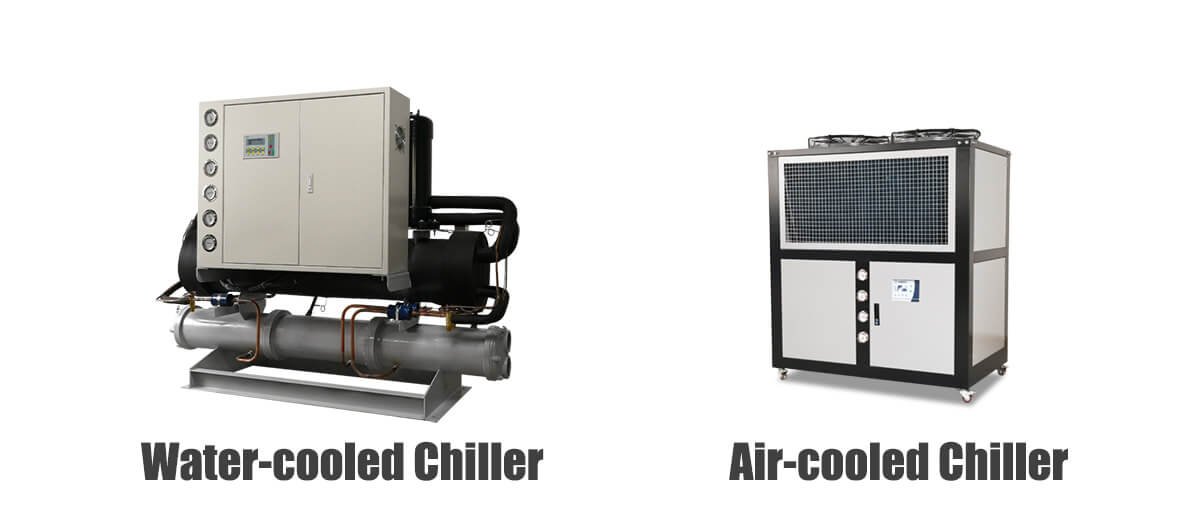
Thermodynamischer Vergleich
Der grundlegende Unterschied liegt im Wärmeabfuhrmedium. Luftgekühlte Systeme geben Wärme an die Umgebungsluft ab (spezifische Wärmekapazität: 1,005 kJ/kg·K), während wassergekühlte Systeme Wärme an das Kühlturmwasser abgeben (spezifische Wärmekapazität: 4,186 kJ/kg·K), etwa 4× effizienter Wärmeübertragung.
| Artikel | Wassergekühlter Kühler | Luftgekühlter Chiller |
|---|---|---|
| Kühlstabilität (ΔT-Leistung) | ±0,1–0,3 °C (ausgezeichnet) | ±0,5–1,5 °C (mäßig) |
| Energieeffizienz (COP) | 4,5–6,5 (höher in großen Systemen) | 3,0–4,5 (verschlechtert sich bei hohen Umgebungstemperaturen) |
| Komplexität der Installation | Höher (Turm, Pumpen, Rohrleitungen) | Unten (direkte Platzierung) |
| Erstinvestition | 20–40 % höher | Niedrigere Grundkosten |
| Wartungsanforderungen | Kühlturmaufbereitung, Wassermanagement | Reinigung der Kondensatorschlange, Austausch des Filters |
| Geeigneter Kapazitätsbereich | >50 kW (optimal >150 kW) | <50 kW (optimal <150 kW) |
| Einfluss der Umgebungstemperatur | Niedrig (2–3 % pro 10 °C) | Hoch (5–8 % pro 10 °C Anstieg) |
| Wasserverbrauch | Erheblich (Verdunstungsverlust) | Minimal |
| Beste Anwendung | Massenproduktion rund um die Uhr, Präzisionsprozesse | Flexible/dezentrale Produktion, Labore |
Wassergekühlte Kühler in der großen Leiterplattenproduktion
Große Leiterplattenfabriken bevorzugen aufgrund ihrer thermischen Stabilität und Energieeffizienz im Dauerbetrieb typischerweise wassergekühlte Kühler.
Anstatt die Wärme direkt an die Luft abzugeben, übertragen wassergekühlte Systeme die Wärme über einen sekundären Wasserkreislauf, der an Kühltürme oder Trockenkühler angeschlossen ist. Dadurch entsteht ein zweistufiger Wärmeabfuhrpfad:
- Primärschleife: Prozesswasser → Verdampfer → Kompressor → Kondensator → Sekundärwasser
- Sekundärschleife: Sekundärwasser → Kühlturm (Verdunstung) oder Trockenkühler (sinnvoll) → Atmosphäre
| Parameter | Typischer Wert | Auswirkungen auf das System |
| Temperatur der Wasserversorgung des Kondensators | 25–32°C | Bestimmt den Kondensationsdruck |
| Annäherungstemperatur (Turm an Wasser) | 3–5°C | Bestimmt die Wirksamkeit des Turms |
| Kondensationstemperatur (R-410A) | 35–42°C | Beeinflusst die Arbeit des Kompressors |
| Verflüssigungsdruck (R-410A) | 18–26 bar | Höher = mehr Kompressorarbeit |
| Verbesserung des System-COP | 15–25 % gegenüber luftgekühlt | Bei typischen Umgebungsbedingungen |
Weil Wasser Wärme viel effektiver überträgt als Luft:
- Die Kondensationstemperaturen bleiben niedriger (normalerweise 35–42 °C gegenüber 45–55 °C bei luftgekühlten Geräten).
- Der Auslassdruck des Kompressors nimmt ab (geringeres Kompressionsverhältnis = weniger Arbeit)
- Der System-COP verbessert sich (normalerweise 4,5–6,5 vs. 3,0–4,5)
- Temperaturschwankungen werden reduziert (die thermische Masse des Turmbeckens sorgt für Pufferung)
- Der Verschmutzungsfaktor des Kondensators kann durch Wasseraufbereitung kontrolliert werden
Dies ist besonders wertvoll für Galvanik- und Ätzanlagen, wo große chemische Badvolumina (typischerweise 500–2000 Liter) äußerst stabile thermische Bedingungen erfordern. Die thermische Zeitkonstante großer Tanks kann überschritten werden 30 Minuten, was bedeutet, dass eine langsame, aber gleichmäßige Kühlleistung unerlässlich ist.
In Leiterplattenfabriken, die im Dauerbetrieb arbeiten, insbesondere mit einem Kühlbedarf von über 150 kW, bieten wassergekühlte Systeme im Allgemeinen eine bessere langfristige Betriebseffizienz mit typischen Amortisationszeiten von 2–4 Jahre im Vergleich zu luftgekühlten Alternativen.
Luftgekühlte Kühler für die flexible Leiterplattenproduktion
Luftgekühlte Kältemaschinen werden häufig verwendet in:
- Produktionsanlagen für Prototypen von Leiterplatten
- Kleine Fertigungslinien (<50 kW thermische Belastung)
- Eigenständige CNC-Bohrmaschinen
- Labor- und Forschungs- und Entwicklungsumgebungen
- Dezentrale Kühlzonen
- Einrichtungen ohne zentrale Versorgungsinfrastruktur
Ihr Hauptvorteil ist die vereinfachte Installation:
- Kein Kühlturm oder Kondensatorwasserkreislauf erforderlich
- Infrastrukturkosten reduziert um 30–50 %
- Installationszeit reduziert um 40–60 %
- Das Fabriklayout wird flexibler
- Es sind keine Chemikalien oder Geräte zur Wasseraufbereitung erforderlich
Allerdings werden luftgekühlte Systeme stark von der Umgebungstemperatur beeinflusst. Die Beziehung zur Kühlleistung beträgt ungefähr:
Kapazitättatsächlich = Kapazitätbewertet × (1 – k × (Tmit - Tref))Wobei k ≈ 0,03–0,05 pro °C über der Referenztemperatur (typischerweise 35 °C)
Wenn die Außentemperaturen über die Auslegungsbedingungen steigen:
- Der Temperaturunterschied (ΔT) der Kondensatorschlange nimmt ab, wodurch die Wärmeabgabe verringert wird
- Der Austrittsdruck des Kompressors steigt (kann bei extremen Temperaturen sichere Grenzwerte überschreiten)
- Die Kühlleistung sinkt (typischerweise). 10–15 % bei 40 °C, 20–30 % bei 45 °C)
- Die Temperaturstabilität verschlechtert sich aufgrund der schwankenden Kompressorleistung
- Bei hoher Wärmebelastung kann es zu Kurzzyklen des Kompressors kommen
Aus diesem Grund werden luftgekühlte Systeme im Allgemeinen für kleinere Wärmelasten (<50 kW), Einrichtungen mit ausreichender Belüftung oder Klimazonen mit milden Sommertemperaturen (Umgebungstemperatur typischerweise <35 °C) empfohlen.
Präzisionskühlung für die HDI- und Hochfrequenz-Leiterplattenproduktion
Mit der Weiterentwicklung der PCB-Technologie in Richtung fortschrittlicherer Anwendungen werden die Anforderungen an die Temperaturstabilität deutlich strenger:
- HDI-Strukturen: Mikrovia-Dichten über 100 Vias/cm²
- Hochfrequenz-Kommunikationskarten: Betriebsfrequenzen >28 GHz
- Automobilelektronik: Zuverlässigkeitsanforderungen bis -40 °C bis +125 °C
- AI-Serversubstrate: Wärmedichten >50 W/cm²
- Halbleiter-Verpackungsplatten: Registrierungstoleranzen unter 10 μm
Bei Hochfrequenz-PCB-Materialien (z. B. Rogers RO4003C, Panasonic Megtron 6) sind die dielektrischen Eigenschaften temperaturempfindlich:
| Materielles Eigentum | Temperaturkoeffizient | Auswirkung bei ±1°C Abweichung |
| Dielektrizitätskonstante (Dk) | ±30 bis ±50 ppm/°C | Impedanzschwankung: 0,03–0,05 % |
| Verlustfaktor (Df) | Variable | Signalverlustschwankung: 2–5 % |
| CTE (XY-Ebene) | 12–18 ppm/°C | Dimensionsänderung: 0,0012–0,0018 % |
Schon kleine thermische Veränderungen können Folgendes beeinflussen:
- Signalimpedanz: Die angestrebte Impedanztoleranz von ±5 % erfordert eine Stabilität von ±0,5 °C
- Übertragungsverlust: Die Df-Variation beeinflusst die Einfügungsdämpfung bei hohen Frequenzen
- Ebenenausrichtung: Wärmeausdehnung trägt zu Schicht-zu-Schicht-Registrierungsfehlern bei
- Dimensionsstabilität des Materials: Längenänderungen von 2–5 μm pro Meter pro °C
In der modernen Leiterplattenfertigung reichen die Anforderungen an die Temperaturstabilität aus:
ΔTStabilität = ±0,1 °C bis ±0,3 °C (für HDI/Halbleitergehäuse)
ΔTräumlich = <1,0 °C auf der gesamten Arbeitsfläche der Ausrüstung
ΔTAntwort = <5 Sekunden bis 90 % der Sollwertänderung
Um dieses Maß an Präzision zu erreichen, ist eine mehrschichtige Wärmemanagementarchitektur erforderlich:
| Systemschicht | Funktion | Temperaturregelung | Ansprechzeit |
|---|---|---|---|
| Primärkühler | Grundkühlleistung | ±1,0°C (Industriestandard) | 60–120 Sekunden |
| Sekundäre Präzisionsschleife | Feine Temperatureinstellung | ±0,1°C | 10–30 Sekunden |
| Lokale Gerätekühlung | Endgültige thermische Stabilisierung | ±0,05°C | <5 Sekunden |
| Intelligentes Steuerungssystem | Dynamische Kompensation in Echtzeit | Feedforward + Feedback | Kontinuierlich |
High-End-Systeme legen außerdem Wert auf eine geringe thermische Trägheit, was bedeutet, dass das Kühlsystem schnell auf plötzliche Änderungen der Prozesslast reagieren muss. Zu den wichtigsten Designmerkmalen gehören:
- Minimale Kältemittelfüllung: Reduziert Phasenwechselverzögerungen
- Elektronische Expansionsventile: Präzise Kältemitteldosierung (±0,5 % Genauigkeit)
- PID-Temperaturregelung: Ableitungswirkung zur Vorwegnahme von Laständerungen
- Kaskadensteuerungsarchitektur: Der Sollwert des Primärkreises wird basierend auf dem Bedarf des Sekundärkreises angepasst
Steuerungssysteme und dynamisches Wärmemanagement
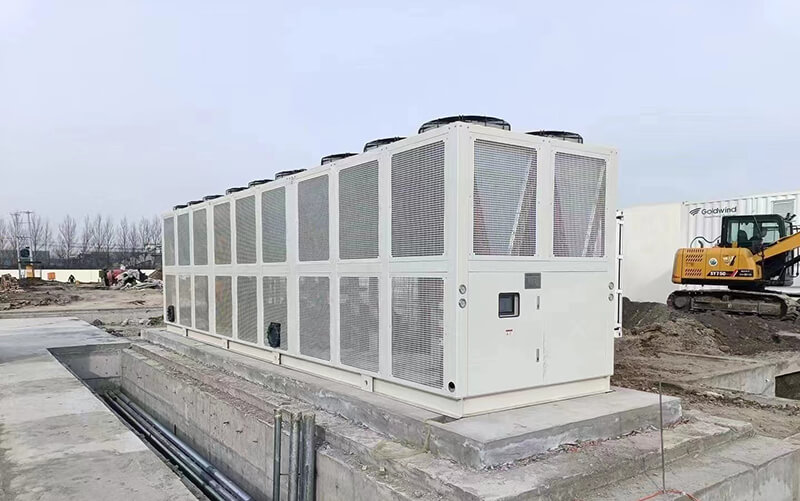
Moderne PCB-Kühlsysteme basieren auf ausgefeilten Steuerungsarchitekturen, um die thermische Stabilität unter wechselnden Belastungen aufrechtzuerhalten.
Grundlagen der PID-Regelung
Der Standard-PID-Regelalgorithmus (Proportional-Integral-Derivativ) für die Temperaturregelung:
u(t) = KP × e(t) + Kich × ∫e(t)dt + KD × de(t)/dtWo:
• KP = Proportionale Verstärkung (bestimmt die Reaktionsgeschwindigkeit)
• Kich = Integrale Verstärkung (eliminiert stationären Fehler)
• KD = Differentialverstärkung (dämpft Schwingungen)
• e(t) = Fehler = Sollwert – Messwert
Typische Abstimmungsparameter für die PCB-Kühlersteuerung:
| Parameter | Typischer Bereich | Zweck |
|---|---|---|
| Proportionalband | 00,5–2,0 °C | Bestimmt die Empfindlichkeit der Steuerung |
| Integrale Zeit | 30–120 Sekunden | Eliminiert den Offset und beeinflusst die Wiederherstellungszeit |
| Ableitungszeit | 0–30 Sekunden | Reduziert Überschwinger, dämpft Schwingungen |
| Zykluszeit | 2–10 Sekunden | Zur digitalen Ausgangsumschaltung |
Erweiterte Kontrollstrategien
- Adaptive Steuerung: Passt die PID-Parameter automatisch an die Betriebsbedingungen und Laständerungen an
- Feedforward-Steuerung: Verwendet gemessene Lastsignale (z. B. Laserleistung, Spindelgeschwindigkeit), um den thermischen Bedarf vorherzusagen
- Kaskadensteuerung: Der Primärkreislauf regelt den Verflüssigungsdruck; Der Sekundärkreis regelt die Prozesstemperatur
- Fuzzy-Logic-Steuerung: Behandelt Nichtlinearitäten und bietet robuste Leistung über den gesamten Betriebsbereich
- Optimierung des maschinellen Lernens: Analysiert historische Daten, um optimale Sollwerte vorherzusagen und Störungen zu antizipieren
Überlegungen zur Energieeffizienz bei der PCB-Kühlung
Kühlsysteme sind oft dafür verantwortlich 15–30 % des Gesamtenergieverbrauchs in Leiterplattenfabriken, was die Effizienzoptimierung wirtschaftlich bedeutsam macht.
Energieoptimierungstechnologien
| Technologie | Mechanismus | Typische Energieeinsparungen | ROI-Zeitraum |
|---|---|---|---|
| Frequenzumrichter (VFD) | Passt die Kompressorgeschwindigkeit an den Kühlbedarf an | 20–40 % bei Teillast | 2–3 Jahre |
| Schwebender Kondensationsdruck | Passt den Kondensationssollwert basierend auf der Umgebungstemperatur an | 5–15 % saisonal | 1–2 Jahre |
| Intelligente Lastanpassung | Vorausschauende Kapazitätszuteilung über Kältemaschinen hinweg | 10–25 % | 2–4 Jahre |
| Pumpen mit variablem Durchfluss | Passt die Pumpengeschwindigkeit an den Systembedarf an | 30–50 % bei Teillast | 2–3 Jahre |
| Wärmerückgewinnung | Erfasst Abwärme zur Nutzung in der Anlage | 10–30 % der Heizlast | 3–5 Jahre |
| Mehrstufige Steuerung | Optimiert die Kompressorstufe | 5–10 % | 1–2 Jahre |
Kennzahlen zur Energieleistung
| KPI | Definition | Typischer Wert |
| COP (Leistungskoeffizient) | Kühlleistung / Kompressorleistung | 3,5–6,0 |
| IPLV (Integrierter Teillastwert) | Gewichteter durchschnittlicher Wirkungsgrad bei verschiedenen Lasten | 4,0–6,5 kW/Tonne |
| kW/Tonne-Verhältnis | Stromverbrauch pro Tonne Kälte | 00,5–0,9 kW/Tonne |
| Kältemaschineneffizienz (EER) | British Thermal Units pro Wattstunde | 12–20 BTU/Wh |
In großen, rund um die Uhr laufenden Leiterplattenfabriken kann die Optimierung der Kühleffizienz durch die oben genannten Maßnahmen die Betriebskosten um senken 50.000–200.000 US-Dollar pro Jahr pro 100 kW Kühlleistung.
Kühlstrategie auf Systemebene in modernen Leiterplattenfabriken
Moderne Leiterplattenfabriken sind selten auf ein einziges Kühlsystem angewiesen. Stattdessen verwenden sie mehrschichtige Wärmemanagementarchitekturen, die den unterschiedlichen Wärmeanforderungen in der gesamten Anlage gerecht werden.
Zentralisierte vs. verteilte Architektur
| Architektur | Vorteile | Nachteile | Am besten für |
|---|---|---|---|
| Zentralisiert (große Zentralanlage) | Höhere Effizienz, einfachere Wartung, bessere Redundanz | Höhere Anschaffungskosten, komplexe Rohrleitungen, Risiko eines einzelnen Ausfalls | Große Anlagen (>50.000 m²) |
| Verteilt (mehrere Gerätekühler) | Einfachere Installation, einfachere Erweiterung, Fehlerisolierung | Höherer Wartungsaufwand, insgesamt weniger effizient | Kleine bis mittlere Einrichtungen, flexible Layouts |
| Hybrid (zentral + dediziert) | Optimale Balance aus Effizienz und Flexibilität | Komplexere Steuerungsintegration | Modernste Leiterplattenfabriken |
Typische Systemkonfiguration
- Zentrale Kühlstationen: Stellen Sie eine Grundlast im Werk bereit (50–70 % der Gesamtkapazität) und arbeiten Sie mit optimierten Sollwerten
- Spezielle Präzisionskühler: Versorgen Sie kritische Geräte (Galvanik, Laserbohren) mit einer strengeren Temperaturkontrolle
- Getrennte Temperaturzonen: Unabhängige Kreisläufe für Nassprozesse (Galvanisieren, Ätzen) und Trockenprozesse (Bohren, AOI)
- Backup-Redundanzsysteme: N+1- oder 2N-Redundanz für kritische Produktionslinien (typischerweise 10–20 % Überkapazität)
- Wärmerückgewinnungsschleifen: Abwärme für Gebäudeheizung oder Warmwasserbereitung einfangen
Prozessspezifische Kühlstrategien
- Galvanikanlagen: Priorisieren Sie die chemische Temperaturstabilität (±0,2 °C). Eine große thermische Masse erfordert eine langsame, gleichmäßige Steuerung mit minimalen Zyklen. Die Steuerung der Umwälzpumpe ist entscheidend für eine gleichmäßige Durchflussverteilung.
- CNC-Bohren: Konzentrieren Sie sich auf die Dimensionskontrolle an der Bohrerspitze. Individuelle Spindelkühlung mit speziellen Strömungskreisläufen. Echtzeit-Temperaturüberwachung an der Werkzeug-Werkstück-Schnittstelle.
- AOI-Systeme: Erfordern optische Stabilität. Die Beleuchtungstemperatur beeinflusst Farbmetrik und Kontrast. Die Steuerung der Klimakammer kann die Kühlung des Kühlers ergänzen.
- Laserbohrsysteme: Erfordern eine lokalisierte hochpräzise Kühlung der Optik (häufig <±0,1 °C). Separate Kühlkreisläufe für Laserquelle und Optikstrang. Schnell reagierende Wärmetauscher zur Vermeidung von thermischer Linsenbildung.
- Laminierpressen: Zonentemperaturregelung über die gesamte Plattenoberfläche. Mehrere unabhängig gesteuerte Heiz-/Kühlzonen. Integrierte thermostatische Mischventile.
Da sich verschiedene Prozesse thermisch unterschiedlich verhalten, muss das Design der Leiterplattenkühlung von einem Standpunkt aus betrachtet werden Systemtechnische Perspektive statt einer einfachen Geräteauswahl. Dazu gehört:
- Kartierung der thermischen Belastung in der gesamten Anlage
- Hydraulische Netzwerkanalyse zur Strömungsverteilung
- Dynamische Simulation thermischer Wechselwirkungen
- Steuerungsstrategieintegration über alle Subsysteme hinweg
Best Practices für Wartung und Betrieb
Eine nachhaltige Kühlsystemleistung erfordert proaktive Wartungspraktiken:
| Wartungsaufgabe | Frequenz | Auswirkungen von Vernachlässigung |
|---|---|---|
| Prüfung und Aufbereitung der Wasserqualität | Monatlich | Kalkablagerungen, mikrobiologisches Wachstum, Korrosion |
| Reinigung der Kondensatorschlange (luftgekühlt) | Vierteljährlich | Kapazitätsverlust von 5–15 % pro Jahr |
| Wasseraufbereitung im Kühlturm | Kontinuierliche + monatliche Analyse | Risiko von Ablagerungen, Korrosion und Legionellen |
| Inspektion von Kältemittellecks | Vierteljährlich | Kapazitätsverlust, Umweltbelastung |
| Kompressorölanalyse | 6–12 Monate | Frühzeitige Verschleißerkennung |
| Kalibrierung des Steuerungssystems | Jährlich | Temperaturdrift, Instabilität |
| Pumpen- und Ventilinspektion | 6 Monate | Strömungsinstabilität, Systemungleichgewicht |
Abschluss
Die beste Kühllösung für die Leiterplattenfertigung hängt von den Prozesseigenschaften, dem Produktionsmaßstab und den Präzisionsanforderungen ab.
Wassergekühlte Chiller bieten eine hervorragende thermische Stabilität (typischerweise). ±0,1–0,3 °C) und überlegene Energieeffizienz (COP 4,5–6,5) für große Leiterplattenfabriken mit kontinuierlicher Produktion. Sie sind optimal für Einrichtungen mit >150 kW Kühlbedarf rund um die Uhr in Betrieb, insbesondere solche mit Präzisionsgalvanik und HDI-Fertigung.
Luftgekühlte Kältemaschinen bieten flexible Installation, geringere Infrastrukturkosten und einfachere Wartung für kleinere oder dezentrale Anwendungen. Sie eignen sich am besten für Einrichtungen mit <50 kW thermische Belastung, milde klimatische Bedingungen oder Anforderungen an häufige Layoutänderungen.
Präzisionskühlsysteme sind für die Herstellung von HDI-, Hochfrequenz- und Halbleitergehäuse-Leiterplatten unerlässlich, wo thermische Schwankungen sich direkt auf die elektrische Leistung und die Maßgenauigkeit auswirken. Diese erfordern die Erzielung mehrstufiger Steuerungsarchitekturen ±0,1°C oder enger Temperaturstabilität.
Letztendlich geht es bei der Leiterplattenkühlung nicht nur um die Ableitung von Wärme. Es geht um die Aufrechterhaltung einer langfristigen thermischen Stabilität in komplexen und sich ständig ändernden Produktionsumgebungen durch:
- Richtige Systemarchitektur auf die Prozessanforderungen abgestimmt
- Komponentenauswahl Dabei legen wir Wert auf Zuverlässigkeit und Effizienz
- Erweiterte Kontrollstrategien für dynamisches Lastmanagement
- Proaktive Wartung um die Leistung über einen längeren Zeitraum aufrechtzuerhalten
Ein richtig konstruiertes Kühlsystem verbessert:
- Produktkonsistenz: Reduzierte Dimensions- und elektrische Abweichungen
- Rendite: Weniger thermisch bedingte Defekte
- Lebensdauer der Ausrüstung: Reduzierte thermische Belastung der Komponenten
- Produktionseffizienz: Reduzierte Nacharbeit und Ausfallzeiten
- Energieleistung: Niedrigere Betriebskosten
Da sich die PCB-Technologie weiter in Richtung höherer Präzision (Sub-10-μm-Merkmale), höherer Dichte (>20 Schichten, >500 I/O) und höherer Frequenzen (>70 GHz) weiterentwickelt, werden industrielle Kühlsysteme eine immer wichtigere Rolle für die Fertigungsstabilität und Produktzuverlässigkeit spielen. Das Wärmemanagementsystem muss als zentraler Prozessfaktor und nicht nur als Hilfsinfrastruktur betrachtet werden.
