

 Tragbarer Kühler
 Luftgekühlter Chiller
 Wassergekühlter Kühler
 Niedertemperaturkühler
 Kundenspezifischer Industriekühler


Schnelle Antwort
Beim Kunststoffspritzen verwendet ein Formtemperaturregler (MTC) eine Pumpe, um erhitzte Flüssigkeit durch die Form zu zirkulieren und so präzise eine stabile, erhöhte Temperatur von bis zu etwa 180 °C aufrechtzuerhalten. Ein Prozesskühler führt aktiv Wärme ab und zirkuliert gekühlte Flüssigkeit, die bei Niedertemperaturanwendungen bis zu -30 °C oder darunter betragen kann. Die Wahl hängt von den Anforderungen des Kunststoffs ab: MTCs verhindern eine vorzeitige Erstarrung und steuern die Oberflächenbeschaffenheit bei langsamer abkühlenden Harzen, während Prozesskühler die Wärme aggressiv abführen, um die Zykluszeiten für schnell laufende Teile mit hohem Volumen zu verkürzen. Für viele anspruchsvolle Anwendungen integriert der optimale Ansatz beides in einem individuelle Kühllösung.
Wichtige Erkenntnisse
- Zweck definiert die Ausrüstung: Verwenden Sie einen Temperaturregler, wenn das Ziel darin besteht, eine Form zu erhitzen und über der Umgebungstemperatur des Wassers zu halten. Verwenden Sie einen Kühler, wenn eine schnelle Wärmeabfuhr Priorität hat.
- Der Flüssigkeitstemperaturbereich ist der primäre Entscheidungsfaktor: MTCs arbeiten typischerweise mit Wasser bis zu 180 °C (oder Öl bis zu 300 °C), während Kompaktkühler Flüssigkeiten von 20 °C bis -30 °C liefern.
- Systemintegration ist üblich: Viele Kunststoffspritz-, Blasform- und Extrusionslinien erfordern sowohl ein MTC für Hochtemperatur-Formoberflächen als auch einen Kühler zum Kühlen des Hydrauliköls, der Einfüllöffnung oder einer sekundären Formhälfte.
- Maßgeschneiderte Kühllösungen verhindern Fehlanpassungen: Standardgeräte versagen oft, wenn die Anforderungen an die erforderliche Kapazität, den Temperaturbereich oder die Korrosionsbeständigkeit prozess- oder materialspezifisch sind.
- Betriebsgrenzen sind wichtig: Jede Technologie hat klare physikalische Grenzen; Der Versuch, eine Form über die Umgebungstemperatur hinaus mit einem MTC zu „kühlen“, funktioniert einfach nicht, während ein Standardkühler nicht die präzise Erwärmung liefern kann, die für technische Harze erforderlich ist.
Einführung
Eine fehlerhafte Temperaturstrategie in einem Kunststoffwerk macht sich selten lautstark bemerkbar – sie äußert sich leise in steigenden Ausschussraten, längeren Zykluszeiten und Ausschusschargen aufgrund von Verzug oder schlechter Oberflächenbeschaffenheit. Ingenieure stellen schnell fest, dass ein pauschaler Ansatz zur Formkühlung nicht funktioniert. Das gleiche Formverfahren erfordert für Nylon eine völlig andere Wärmekontrolle als für Polypropylen.
Die grundlegende Frage ist nicht, welches Gerät „besser“ ist. Es geht darum, zwei unterschiedliche thermische Aufgaben zu verstehen: die Wärme in der Form auf einer bestimmten erhöhten Temperatur zu halten und sie schnell und gleichmäßig abzuführen. Wenn ein Verarbeiter diese Aufgaben durcheinander bringt, installiert er möglicherweise einen einfachen Kühler, wo ein Werkzeugtemperaturregler erforderlich ist, oder er versucht, einen Temperaturregler zu zwingen, einem überhitzten Werkzeug Wärme zu entziehen – mit vorhersehbaren Ergebnissen.
Dieser Artikel erläutert die technische Logik hinter jedem System, hilft Ihnen dabei, das richtige Werkzeug für Ihr thermisches Ziel zu finden, und erklärt, wann ein integriertes System erforderlich ist individuelle Kühllösung wird zum einzig zuverlässigen Weg zu einer konsistenten Produktion.
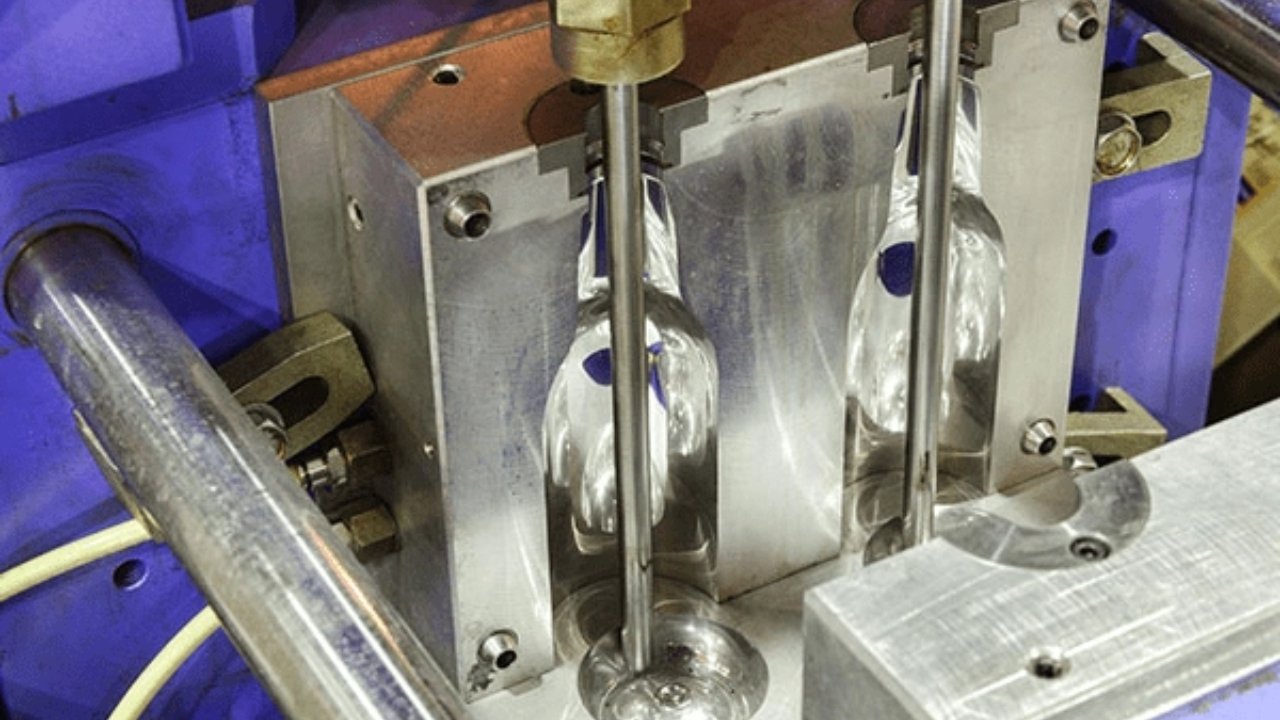
Warum Kunststoffformprozesse unterschiedliche thermische Strategien erfordern
Die Verwechslung zwischen Temperaturreglern und Kühlern beginnt oft mit einem Missverständnis über die Kunststoffe selbst. Jedes Harz hat ein bestimmtes Verarbeitungsfenster.
Betrachten Sie zwei häufige Szenarien:
- Teilkristalline Harze B. Nylon (PA) oder POM, erfordern eine hohe Formoberflächentemperatur – oft 80–120 °C –, um die Kristallisation zu kontrollieren. Ein kühler Schimmelpilz verursacht eine schnelle Hautbildung und innere Spannungen, die zu Verzug führen. Hier besteht die thermische Aufgabe darin Wärme aufrechterhalten. Ein MTC erhitzt die Flüssigkeit aktiv mit einer elektrischen Heizung und regelt diese Temperatur präzise, um zu verhindern, dass die Form zu schnell Wärme abführt.
- Amorphe Harze B. Polystyrol oder Polypropylen, die in einem Werkzeug mit hoher Kavitation – beispielsweise einer Kappenform mit 32 Hohlräumen und einem 3-Sekunden-Zyklus – laufen, erzeugen enorme Hitze, die sofort abgeführt werden muss. Ein Prozesskühler ist für diese Aufgabe konzipiert: Sein Kühlkreislauf (Kompressor, Kondensator, Expansionsventil, Verdampfer) entzieht der Rücklaufflüssigkeit Wärmeenergie und liefert gekühlte Flüssigkeit mit einer Stabilität von ±1 °C oder weniger.
Der Problempunkt entsteht, wenn ein Verarbeiter alle Formen gleich behandelt. Ein auf 20 °C eingestellter Kühler, der „kalte“ Flüssigkeit an eine Nylon-Verbindungsform liefert, führt zu spröden, beanspruchten Teilen. Ein MTC, das versucht, eine überhitzte dünnwandige Verpackungsform zu kontrollieren, wird erleben, wie seine Heizung endlos läuft, während die Formtemperatur nach oben driftet. Die Anpassung der thermischen Strategie an das Verhalten des Polymers ist nicht optional – sie ist die Grundlage für eine gleichbleibende Qualität.
Ein praktisches Beispiel für thermische Fehlanpassung
Ein Verarbeiter, der glasfaserverstärkte PET-Vorformlinge verarbeitet, meldete hohen Ausschuss aufgrund ungleichmäßiger Wandstärken. Die Untersuchung ergab, dass für die gesamte Form ein einziger Kühlkreislauf mit 12 °C verwendet wurde. Während die Kernseite eine aggressive Kühlung benötigte, erforderte die Hohlraumseite bei dieser speziellen Sorte eine Oberflächentemperatur von 140 °C, um ein vorzeitiges Einfrieren am Anschnitt zu verhindern. Die Lösung bestand nicht in einer größeren Pumpe oder einer niedrigeren Temperatur, sondern in der Trennung der Wärmekreisläufe und der Integration eines MTC auf der Hohlraumseite. Der Ausschussanteil sank von 8 % auf unter 1,5 %.
Wichtige technische Anforderungen bei der thermischen Kontrolle von Formen
Vor der Auswahl einer Ausrüstung definiert die Anwendung die erforderliche Leistung. Die folgenden technischen Anforderungen haben direkten Einfluss darauf, ob und mit welchen Spezifikationen ein MTC oder Kühler geeignet ist.
| Erfordernis | Typischer Wertebereich | Auswirkungen auf die Geräteauswahl |
|---|---|---|
| Flüssigkeitsaustrittstemperatur | -30°C bis 180°C | Über 90 °C (Wasser) ist ein unter Druck stehender MTC erforderlich, kein Kühler. Unter 20 °C ist ein Kühler mit Kompressorkreislauf erforderlich. |
| Wärmelast muss abgeführt werden | 1–200+ Tonnen Kühlung | Bestimmt die Leistung des Kompressors für einen Kühler; irrelevant für einen MTC, der Heizleistung in kW bereitstellt. |
| Erforderliche Temperaturstabilität | ±0,5°C bis ±2°C | Sowohl gut konzipierte MTCs als auch Kühler können ±1 °C erreichen; Um ±0,5 °C am Formanschnitt zu erreichen, sind möglicherweise eine direkte Verteilerabtastung und eine PID-Steuerung erforderlich. |
| Pumpendruck und Fördermenge | 20–100 PSI / 20–200 LPM | Das System muss den Formdruckabfall überwinden. Ein Kühler mit einer kleinen Tank-zu-Prozess-Pumpe könnte bei einer restriktiven Form blockieren. MTCs verfügen häufig über Turbinenpumpen mit hohem Durchfluss, die für den Betrieb bei hohen Temperaturen ausgelegt sind. |
| Flüssigkeitstyp | Wasser, Glykol-Wasser-Gemisch, Öl | Glykol reduziert die Kältemaschinenkapazität im Vergleich zu reinem Wasser um etwa 15–20 %. MTCs, die Öl für Temperaturen über 150 °C verwenden, erfordern ölbeständige Dichtungen und Schläuche. |
Diese Anforderungen sind nicht austauschbar. Ein häufiger Fehler besteht darin, einen Kühler ausschließlich auf der Grundlage der „Tonnen an Kühlung“ auszuwählen, ohne zu bestätigen, ob der Prozess tatsächlich einen Heizkreislauf benötigt. Der beste individuelle Kühllösungen Beginnen Sie mit einer thermischen Belastungsberechnung, die zwischen Heizzonen und Kühlzonen unterscheidet, die häufig in derselben Form vorhanden sind.
Passende Lösung und wie sie in der Praxis funktioniert
Formtemperaturregler: Kontrollierte Heizung und Zirkulation
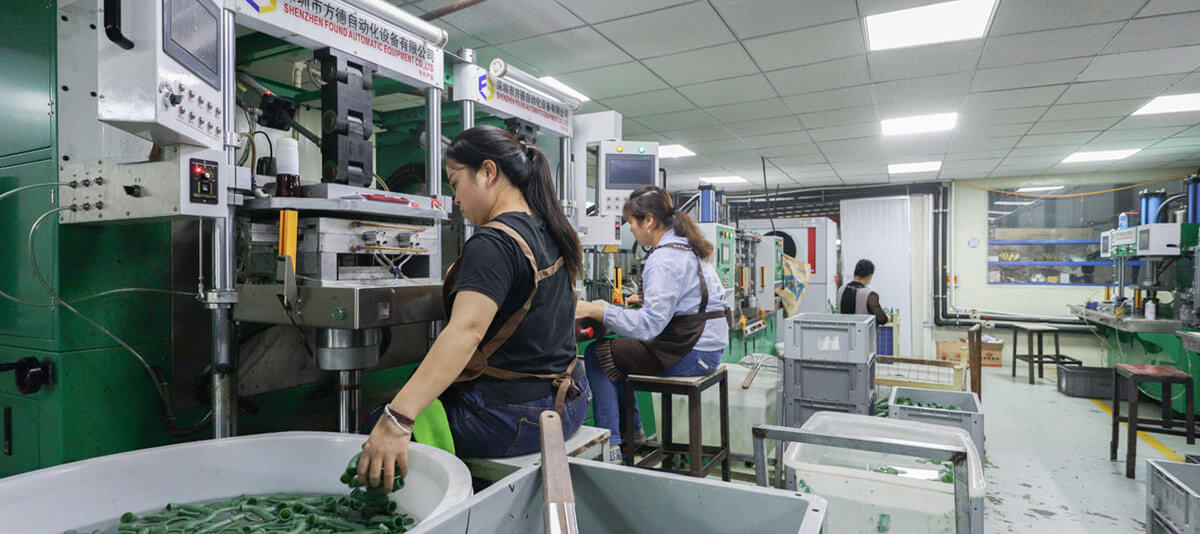
Ein MTC fungiert als Präzisionsheizung und Heißflüssigkeitszirkulator. Die Arbeitslogik ist unkompliziert: Ein elektrisches Heizelement hebt die Flüssigkeit in einem Tank auf einen bestimmten Wert, und eine Pumpe drückt sie durch die Formkanäle, bevor sie zum erneuten Erhitzen in den Tank zurückkehrt. Der Regelkreis regelt die Heizung basierend auf der Rücklaufflüssigkeits- oder Formoberflächentemperatur.
Ein konkretes Konfigurationsbeispiel sind wasserbetriebene MTCs mit einem Drucksystem. Bei 120 °C liegt Wasser über seinem atmosphärischen Siedepunkt, daher muss der Kreislauf abgedichtet und mit einem Wärmetauscher unter Druck gesetzt werden, der die Ausdehnung bewältigen kann. Geräte mit einer Nenntemperatur von 160–180 °C verwenden typischerweise eine interne Spule zur Kühlung – diese dient nicht der Kühlung der Form, sondern der schnellen Kühlung des MTC-eigenen Kreislaufs beim Wechsel zwischen Aufgaben. Diese Spülkühlfunktion sollte nicht mit der Prozesskühlleistung verwechselt werden.
In der Praxis kann ein Hersteller von Nylongetrieben, der einen Heißkanalverteiler bei 160 °C betreibt, für diesen Zweck keinen Kühler verwenden. Ein MTC lässt erhitztes Öl durch den Verteiler zirkulieren und hält den Anguss im geschmolzenen Zustand. Die indirekte Kühlschlange des MTC ermöglicht es dem Bediener dann, die Temperatur während eines Formwechsels schnell zu senken und so thermische Schäden zu verhindern.
Prozesskühler: Aktive Wärmeabfuhr
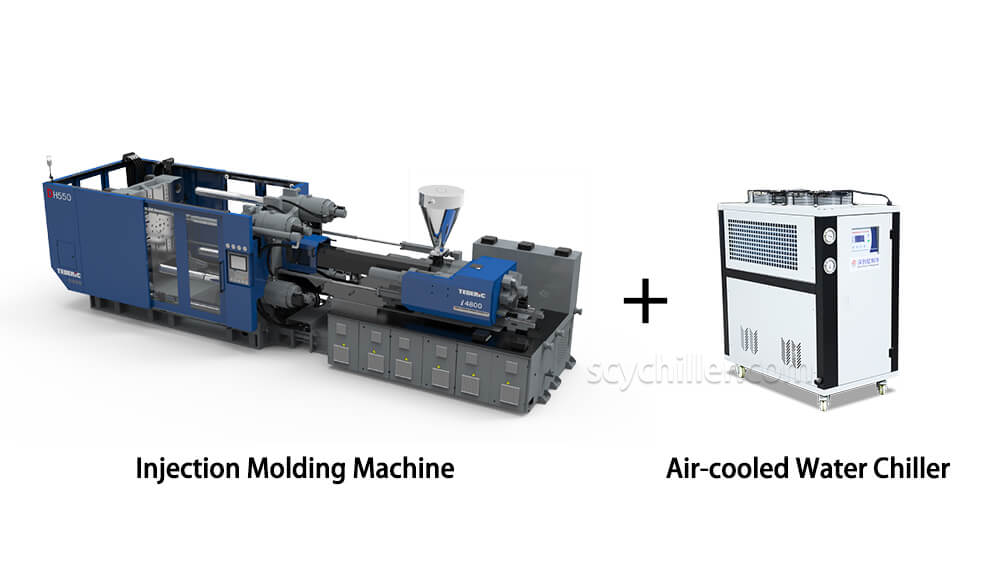
Ein Prozesskühler ist im Wesentlichen ein kompaktes Kühlsystem. Die Flüssigkeit aus dem Prozess kehrt zum Verdampfer des Kühlers (gelötete Platte oder Rohrbündelverdampfer) zurück, wo sie Wärme an den Kältemittelkreislauf abgibt. Der Phasenwechsel des Kältemittels von flüssig zu gasförmig absorbiert Wärmeenergie, die dann an die Umgebungsluft (luftgekühlt) oder einen Anlagenwasserkreislauf (wassergekühlt) abgegeben wird. Die nun abgekühlte Flüssigkeit kehrt in die Form zurück.
Eine praktische Randbedingung: Für einzelne Formmaschinen sind mobile luftgekühlte Kältemaschinen von 0,84 bis 40 Tonnen üblich, während wassergekühlte oder Zentralschneckenaggregate komplette Produktionshallen bedienen. Für ein Hochgeschwindigkeits-PET-Vorformlingssystem, das bis zu 30 Tonnen Wärme abgibt, bietet ein wassergekühlter Kühler mit einem Rohrbündelverdampfer und einem entfernten Kühlturm eine bessere Energieeffizienz als ein luftgekühltes Äquivalent in einer klimatisierten Anlage.
Für Anwendungen unter 0 °C – wie bestimmte Reaktionsspritzgussprozesse oder spezielle chemische Kühlung – ist ein Glykolkühler mit einem Flüssigkeitsreservoir und einem Niedertemperaturkompressorpaket (z. B. ein Bitzer- oder Hanbell-Schraubenkompressor) erforderlich. Ein 2-Tonnen-Glykolkühler, der Flüssigkeit mit einer Temperatur von -30 °C in die Kühlkanäle einer Form zirkulieren lässt, erfordert eine sorgfältige Auswahl der Komponenten: Der Verdampfer kann ein Typ mit gelöteten Platten und einer Edelstahlkonstruktion sein, um Korrosion zu widerstehen, und die Steuerungen müssen Änderungen der Flüssigkeitsviskosität bewältigen. Ein wichtiger Hinweis: Systeme, die für -30 °C ausgelegt sind, können nicht ohne gründliches Spülen und Neukalibrieren der Durchflussregler zwischen Glykol und Wasser umgeschaltet werden, da sich die thermischen Eigenschaften der beiden Flüssigkeiten grundlegend unterscheiden.
Anwendungsanpassungstabelle: Identifizieren der richtigen Ausrüstung
Diese Tabelle verknüpft Prozessbeobachtungen mit dem am besten geeigneten Gerätetyp.
| Prozessbeobachtung / Ziel | Warum ist es wichtig | Passende Ausrüstung | Wichtige Bestätigung |
|---|---|---|---|
| Zur Harzkristallisation ist eine Formoberfläche über 90 °C erforderlich | Kalte Formen führen zu vorzeitiger Hautbildung und Verformung von Nylon-, PBT- und POM-Teilen | Druckwasser-MTC oder Öl-MTC | Bestätigen Sie den maximalen Formdruckabfall; Wählen Sie die richtige Pumpenkennlinie |
| Die Zykluszeit ist werkzeugbegrenzt; muss die Wärme schneller abführen | Dünnwandige Verpackungsformen mit hoher Kavitation erreichen schnell eine thermische Sättigung | Prozesskühler (luft- oder wassergekühlt) | Führen Sie eine Wärmelastberechnung durch (Materialdurchsatz in Pfund/Stunde × spezifische Wärme). |
| Verwendung von Wasser unter 20 °C oder Glykolmischungen unter 0 °C | Verhindert die Bildung wasserbedingter Korrosion und sorgt für die Stabilität bei niedrigen Temperaturen | Niedertemperatur-Glykolkühler mit Edelstahlverdampfer | Definieren Sie die erforderliche Mindesttemperatur. Überprüfen Sie die Glykolkonzentration und die Reduzierung der Wärmeübertragung |
| Der Heißkanalverteiler erfordert Hochtemperaturöl | Verteiler benötigen eine stabile Wärme, um ein Einfrieren des Tors zu verhindern | Öl-MTC (bis 300°C) | Stellen Sie sicher, dass alle Dichtungen, Drehverbindungen und Schläuche für Öl geeignet sind |
| Schimmel hat sowohl eine heiße als auch eine kalte Hälfte | Prozessoren stehen vor der klassischen Anforderung „warmer Hohlraum / kühler Kern“. | Integriertes Zweikreissystem: MTC + Chiller | Beide Kreisläufe müssen hydraulisch getrennt sein; Der zentrale Verteiler sollte jeden Stromkreis unabhängig weiterleiten |
Überlegungen zur Implementierung
Vor der Integration eines Temperaturregelgeräts testen und validieren Anlageningenieure in der Regel ihre Annahmen. Hier ist individuelle Kühllösungen Ersetzen Sie generische Katalogmodelle. Die folgenden praktischen Schritte helfen, kostspielige Integrationsfehler zu vermeiden:
- Überprüfen Sie die Kompatibilität der Flüssigkeitspfade: Eine Form mit winzigen, einschränkenden Kühlkanälen (z. B. 4 mm Durchmesser) kann zu übermäßigen Druckabfällen führen. Ein Kühler mit einer Kreiselpumpe mit niedrigerem Druck könnte blockieren. Geben Sie eine Verdrängerpumpe oder eine Hochdruckturbinenpumpe an, wenn der berechnete Druckabfall die Kapazität der Pumpe in der Mitte der Kurve bei der Zieldurchflussrate übersteigt.
- Berücksichtigung der Flüssigkeitsreduzierung: Bei Verwendung einer 35-prozentigen Glykolmischung in einem Kühler für eine Anwendung bei -15 °C beträgt die Kühlkapazität des Kühlers etwa 80–85 % seiner Nennwasserleistung. Lieferanten sollten Kapazitätskurven für die spezifische Glykolkonzentration und -temperatur bereitstellen. Eine Nichtübereinstimmung führt hier dazu, dass das Gerät den Sollwert bei maximaler Belastung nicht halten kann.
- Anlagenintegration: Luftgekühlte Kältemaschinen benötigen eine ausreichende Anlagenbelüftung; Ein 20-Tonnen-Kühler gibt etwa 70 kW Wärme an die Umgebung ab. Wassergekühlte Einheiten erfordern einen Turm oder einen zentralen Kreislauf, was zu Problemen bei der Kondensatorwasseraufbereitung und Ablagerungen führt. In wasserarmen Regionen oder Anlagen, in denen ein Kühlturm nicht realisierbar ist, werden luftgekühlte Modelle trotz ihrer höheren Kondensationstemperatur bevorzugt.
- Materialkompatibilität: Bei allen Kühlanwendungen mit Sole oder aggressiven Chemikalien können standardmäßige kupfergelötete Wärmetauscher versagen. Kundenspezifische Optionen – Titanverdampfer oder Edelstahlgehäuse – verhindern Kontaminationen und gewährleisten eine lange Lebensdauer in pharmazeutischen oder chemischen Formungsumgebungen.
- Betriebsschulung: MTCs, die über 120 °C betrieben werden, stellen eine Verbrennungsgefahr dar. Betreiber müssen sich darüber im Klaren sein, dass die direkte Kühlung des MTC-Kreislaufs mit kaltem Anlagenwasser über das Spülventil zu einem Thermoschock und Rissen im Heiztank führen kann, wenn dies nicht schrittweise erfolgt. Dies ist eine häufige Ursache für einen vorzeitigen MTC-Ausfall.
Einschränkungen und Negativ-Fit-Szenarien
Kein einzelnes Wärmegerät ist universell. Das Erkennen, wann ein bestimmter Ansatz nicht geeignet ist, verhindert sowohl Sicherheitsvorfälle als auch Prozessausfälle.
- Verwenden Sie keinen MTC, wenn Sie eine schnelle Wärmeableitung benötigen. Wenn die Rücklaufflüssigkeit einer Form dauerhaft den MTC-Sollwert um mehr als 5 °C überschreitet, schaltet sich die Heizung des MTC einfach ab und die Temperatur der Form steigt unkontrolliert an. Dies weist auf eine Wärmelast hin, die eine aktive Kühlung und keine Heizungsregelung erfordert.
- Verwenden Sie zum Erhitzen bei hohen Temperaturen keinen Standardkühler. Der Kompressor einer Kältemaschine ist darauf ausgelegt, die Kältemittelrücklauftemperaturen innerhalb eines sicheren Bereichs zu regeln. Wenn der Verdampfer einer Kältemaschine 100 °C heißem Rücklaufwasser ausgesetzt wird, wird der Kompressor zerstört. Das Hochtemperaturformen erfordert separate, dedizierte Heizkreisläufe.
- Glykolkühler funktionieren nicht per Plug-and-Play mit Wasser. Die Umstellung eines Kühlers von einem Glykolkreislauf mit -20 °C auf einen Wasserkreislauf mit 15 °C erfordert eine vollständige Entleerung, Spülung mit Wasser, Überprüfung der Pumpendichtungskompatibilität (Glykol packt bestimmte Arten von Gleitringdichtungen) und möglicherweise eine Neuprogrammierung der Steuersollwerte. Wenn nicht gespült wird, kann es zu Bakterienwachstum und Gelierung der Flüssigkeit kommen.
- Anwendungen bei extrem niedrigen Temperaturen (-30 °C und darunter) erfordern besondere Designüberlegungen. Dazu gehören überdimensionierte Kondensatoren, Kurbelgehäuseheizungen am Kompressor und Isolierung aller freiliegenden Prozessleitungen. Ein herkömmlicher tragbarer Kühler wird diese Temperaturen ohne einen nicht zuverlässig erreichen individuelle Kühllösung spezifiziert und für den Einsatz gebaut.
Checkliste für die Projektbesprechung
Bereiten Sie diese Artikel vor, bevor Sie einen Lieferanten für einen Formtemperaturregler oder Prozesskühler beauftragen. Klare Antworten beschleunigen die Auswahl eines richtig konstruierten Systems und zeigen, ob es sich um ein Standardgerät oder ein individuelle Kühllösung ist notwendig.
- Anwendung und Harz: Welche(n) Kunststoff(e) formen Sie? Was ist der empfohlene Temperaturbereich für die Formoberfläche?
- Dual-Loop-Anforderung: Verfügt Ihre Form über separate Temperaturzonen (z. B. heiße Kavität und kalter Kern)?
- Wärmelast (für Kühler): Wie hoch ist der Gesamtdurchsatz an Kunststoff (lb/h oder kg/h)? Geben Sie die spezifische Wärme des Materials an, sofern bekannt.
- Heizleistung (für MTC): Wie hoch ist die anfängliche Aufheizzeit der Form und wie groß ist die Masse des Werkzeugstahls?
- Flüssigkeits- und Temperatursollwert: Liegt die gewünschte Flüssigkeitstemperatur über 90 °C (Druck-MTC erforderlich) oder unter 20 °C (Kühler erforderlich)? Verwenden Sie Wasser, Glykol oder Öl?
- Durchfluss und Druckabfall: Welchen Kühlkanaldurchmesser hat die Form und wie groß ist die Gesamtkreislauflänge? Welcher Pumpendruck steht zur Verfügung?
- Umgebungs- und Einrichtungseinschränkungen: Verfügen Sie über Anlagenkühlwasser für einen wassergekühlten Kondensator oder ist Luftkühlung Ihre einzige Option? Wie hoch ist die Umgebungslufttemperatur im Produktionsbereich im Sommer?
- Bedenken hinsichtlich Korrosion oder Material: Sind aufgrund der Flüssigkeit oder der Umgebung spezielle medienberührende Materialien erforderlich (Edelstahl, Titan)?
- Produktionsmuster: Arbeiten Sie ständig dort, wo es auf Energieeffizienz ankommt, oder nur zeitweise, wo ein einfacherer Ein-/Aus-Kompressor akzeptabel ist?
FAQ
Q1. Kann ein Formtemperaturregler meine Form kühlen?
Ein MTC sorgt für Kühlung nur in dem Sinne, dass Flüssigkeit durch einen indirekten Wärmetauscher geleitet wird, um die eigene Flüssigkeitstemperatur zu senken, typischerweise aus Reinigungs- und Sicherheitsgründen. Es kann nicht aktiv Wärme aus einer Form abführen, die durch die schnelle Produktion überschüssige Wärmeenergie erzeugt. Wenn die Temperatur der Rücklaufflüssigkeit Ihrer Form ständig über den Sollwert steigt, benötigen Sie eine aktive Kühlung durch einen Kühler.
Q2. Welche Flüssigkeit sollte ich in meinem Kühler für Minustemperaturen verwenden?
Bei Temperaturen bis -30 °C ist eine Mischung aus Wasser und inhibiertem Propylen oder Ethylenglykol üblich. Die erforderliche Konzentration verändert den Wärmeübergangskoeffizienten und die Pumpfähigkeit der Flüssigkeit. Typisch ist eine Glykolmischung mit 35–50 %. Unterhalb dieser Temperaturen sind spezielle Niedertemperatur-Wärmeträgerflüssigkeiten erforderlich. Die Pumpe und der Verdampfer des Kühlers müssen entsprechend der erhöhten Viskosität und verringerten Wärmekapazität der Glykolflüssigkeit dimensioniert werden; Kapazitätsdiagramme des Herstellers sollten den Betriebspunkt bestätigen.
Q3. Wann benötige ich eine individuelle Kühllösung anstelle eines Standardgeräts?
Ein handelsübliches Gerät ist geeignet, wenn Ihr erforderlicher Temperaturbereich, Ihre Wärmelast und Ihr Flüssigkeitstyp in die Standardbewertungstabelle des Herstellers fallen. Du brauchst ein individuelle Kühllösung wenn Ihre Anwendung ungewöhnliche Anforderungen wie mehrere Kühlkreisläufe mit sehr unterschiedlichen Temperaturen in einem System, aggressive oder korrosive Flüssigkeiten, die eine Titan- oder Edelstahlkonstruktion erfordern, extreme Umgebungsbedingungen (40 °C+) oder spezielle Sicherheitsbewertungen wie die Explosionsschutzklassifizierung (ATEX/IECEx) für flüchtige Umgebungen erfordert.
Q4. Ist ein MTC vom Öltyp für hohe Temperaturen besser als ein MTC vom Wassertyp?
MTCs vom Wassertyp bieten eine bessere Wärmeübertragungseffizienz und werden bis zu ihrer Druckgrenze von etwa 180 °C bevorzugt. Öl-MTCs werden für Anwendungen verwendet, die 200 °C bis 300 °C erreichen, typischerweise für technische Kunststoffe mit sehr hohen Temperaturen oder Heißkanalsysteme weit entfernt von der Steuerung. Die geringere spezifische Wärmekapazität des Öls bedeutet, dass die Wärmeübertragung langsamer ist und das System aufgrund einer möglichen Verkokung und einer Verschlechterung der Dichtungen bei extremen Temperaturen mehr Wartung erfordert. Die Wahl hängt rein von der benötigten Temperatur ab.
Auswahl-Checkliste
Bevor Sie eine Bestellung abschließen, sollten Sie die folgenden Maßnahmen ergreifen, um kostspielige Ausfälle vor Ort zu verhindern.
- Bestätigt, dass die Gesamtwärmeabgabe der Form (kW/Tonne) berechnet und mit der Kapazität des in Frage kommenden Kühlers bei der erforderlichen Austrittsflüssigkeitstemperatur verglichen wurde.
- Es wurde bestätigt, dass die Druckströmungskurve der Pumpe die erforderliche minimale turbulente Strömung (Reynolds-Zahl > 5.000) durch die Kühlkanäle der Form liefern kann.
- Bei MTCs über 120 °C wurde bestätigt, dass der Kreislauf unter Druck steht und alle Formanschlüsse und Schläuche für den Dauerbetrieb bei hohen Temperaturen ausgelegt sind.
- Bei Niedertemperaturkühlern wurde eine Flüssigkeitsprobe auf die Zielglykolkonzentration getestet und die Auswahl des Verdampfermaterials bestätigt (z. B. gelötete Edelstahlplatte für Glykolbetrieb).
- Überprüfung der elektrischen Infrastruktur der Anlage zur Bewältigung der Volllaststromstärke (FLA) der Einheit; Ein luftgekühlter 40-Tonnen-Kühler erfordert häufig einen speziellen Trennschalter und ein umfangreiches Kabel.
- Wir gingen den geplanten Installationsbereich entlang, um sicherzustellen, dass um die Lufteinlässe und -auslässe des Geräts oder den Zugang zu den Wasserleitungen des Kondensators ausreichend Freiraum (normalerweise mindestens 1 Meter) vorhanden ist.
- Wenn Sie ein zentrales System bestellen, überprüfen Sie die hydraulische Trennung zwischen MTC- und Kühlkreisläufen, damit sich der eine über einen gemeinsamen Verteiler nicht gegenseitig beeinflusst.
Abschluss
Die Entscheidung zwischen einem Formtemperaturregler und einem Prozesskühler ist keine Markenpräferenz, sondern eine thermodynamische Verpflichtung, die durch das Harz, das Formdesign und das Zykluszeitziel vorgegeben wird. Ein Prozesskühler löst das Problem übermäßiger Hitze. Ein Formtemperaturregler löst das Problem unzureichender Wärme. Wenn Sie erkennen, welches Problem Sie auf jeder Formhälfte lösen, gelangen Sie zum richtigen Gerät.
Bei unkomplizierten Anwendungen leistet die Standardausrüstung zuverlässig ihren Dienst. Sobald der Prozess jedoch eine Kombination aus aggressiver Kühlung in einem Kreislauf und präziser Erwärmung in einem anderen, Flüssigkeiten mit niedriger Temperatur oder korrosiven Umgebungen beinhaltet, a individuelle Kühllösung Dies ist die einzige zuverlässige Möglichkeit, die Wärmeleistung der Maschine an den tatsächlichen Bedarf der Form anzupassen. Bevor Sie sich auf eine Spezifikation festlegen, erfassen Sie Ihre Wärmelastdaten, definieren Sie Ihren Flüssigkeitsweg und fordern Sie den Lieferanten mit Ihren realen, nicht idealen Betriebsbedingungen heraus. Das resultierende System wird sich nicht theoretisch, sondern durch messbare Reduzierungen des Ausschusses und der Zykluszeit amortisieren.
