

 Refroidisseur portable
 Refroidisseur à air
 Refroidisseur à eau
 Refroidisseur à basse température
 Refroidisseur industriel personnalisé


Les refroidisseurs à recirculation de laboratoire sont des systèmes de gestion thermique essentiels utilisés dans la recherche scientifique, les laboratoires d'analyse, les installations de biotechnologie, le développement pharmaceutique, les tests de semi-conducteurs et les environnements de R&D industriels avancés. Contrairement aux refroidisseurs industriels conventionnels, les refroidisseurs à recirculation de laboratoire sont conçus pour un contrôle de température hautement stable, propre et précis dans des conditions de fonctionnement continu.
Dans les environnements de laboratoire, la température n’est pas simplement un paramètre de refroidissement : c’est souvent une variable expérimentale contrôlée. Même des fluctuations thermiques mineures peuvent affecter la cinétique de réaction, la précision des mesures, l'alignement optique, les propriétés des matériaux ou l'activité biologique. À mesure que la recherche moderne évolue vers une plus grande précision et une plus grande automatisation, le rôle des refroidisseurs à recirculation est devenu de plus en plus important.
Un refroidisseur à recirculation de laboratoire fonctionne comme un système de refroidissement en boucle fermée qui fait circuler en continu un liquide de refroidissement à température contrôlée entre le refroidisseur et l'équipement de laboratoire, garantissant ainsi des conditions de fonctionnement stables sur de longues périodes expérimentales.
Pourquoi un contrôle précis de la température est important dans les laboratoires
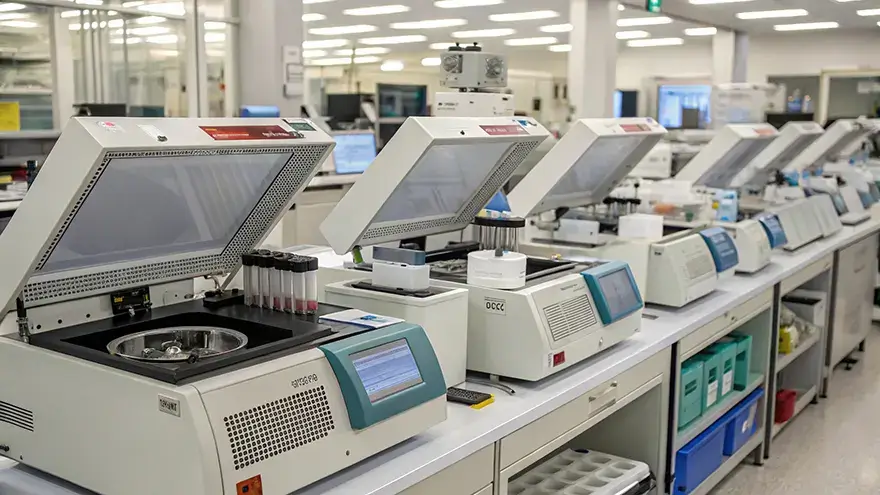
Dans les applications scientifiques et analytiques, la température influence directement :
- Taux de réaction chimique
- Activité biologique
- Stabilité optique
- Précision du signal électronique
- Comportement du matériau
- Étalonnage des instruments
Contrairement aux systèmes de refroidissement industriels généraux qui empêchent principalement la surchauffe, les refroidisseurs de laboratoire doivent maintenir des tolérances de température très étroites.
Par exemple:
- En synthèse chimique, de petits changements de température peuvent modifier les voies de réaction
- Dans les systèmes PCR, les écarts de température peuvent affecter la précision de l’amplification de l’ADN
- En spectroscopie, la dérive thermique peut influencer la sensibilité du détecteur
- Dans la recherche sur les lasers, l'instabilité de la température affecte la cohérence de la longueur d'onde et la qualité du faisceau
En raison de ces sensibilités, les refroidisseurs de laboratoire nécessitent généralement une stabilité de température dans :
\pm0.1^\circ C \sim \pm0.5^\circ C
Dans les applications analytiques ou semi-conductrices haut de gamme, des tolérances encore plus strictes peuvent être nécessaires.
Principe de fonctionnement d'un refroidisseur à recirculation de laboratoire
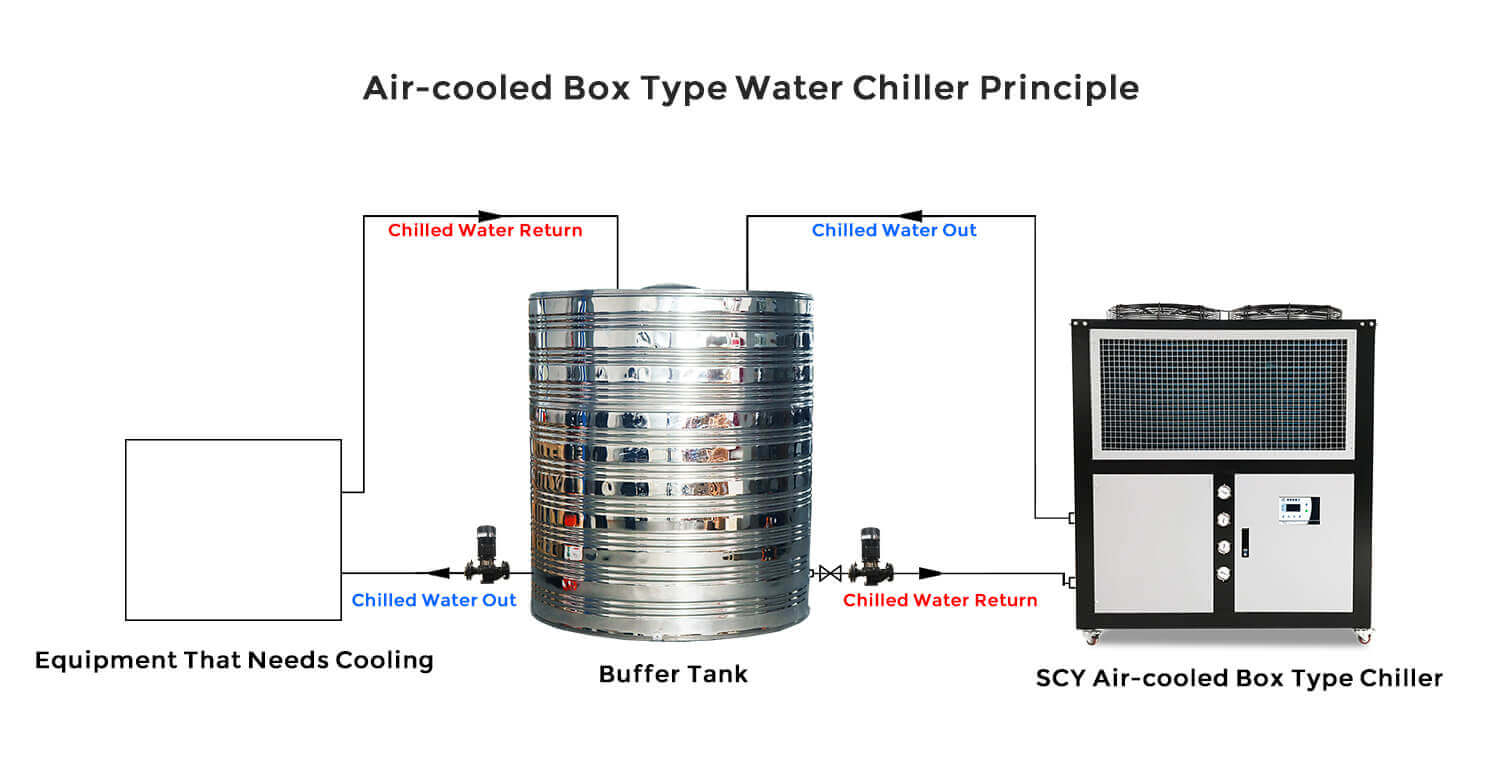
Un refroidisseur à recirculation de laboratoire combine :
- Un système de réfrigération
- Une boucle de circulation du liquide de refroidissement
- Un système de contrôle de température précis
Le cycle de réfrigération élimine la chaleur du liquide de refroidissement en circulation, tandis que le système de pompe fournit en continu un fluide à température contrôlée aux équipements de laboratoire externes.
Cycle de réfrigération de base
Le système de réfrigération comprend généralement :
- Compresseur
- Condenseur
- Soupape de détente
- Évaporateur
Le compresseur comprime le réfrigérant à un état haute pression, permettant le rejet de chaleur au niveau du condenseur. Après réduction de pression à travers le détendeur, le réfrigérant absorbe la chaleur du fluide de procédé en circulation à l'intérieur de l'évaporateur.
Le fluide refroidi est ensuite pompé vers l’équipement de laboratoire connecté.
Principaux composants d'un refroidisseur de laboratoire
Compresseur : capacité de refroidissement stable
Le compresseur est la principale source d’énergie du système de réfrigération.
Les refroidisseurs de laboratoire modernes utilisent souvent des compresseurs pilotés par inverseur car ils fournissent :
- Meilleure stabilité de la température
- Moins de vibrations
- Consommation d’énergie réduite
- Efficacité améliorée à charge partielle
Comparaison des compresseurs
| Type de compresseur | Avantages | Utilisation typique en laboratoire |
|---|---|---|
| Compresseur à vitesse fixe | Coût initial inférieur | Applications de refroidissement de base |
| Compresseur inverseur | Contrôle précis de la température | Laboratoires de haute précision |
| Compresseur de défilement | Faibles vibrations et fonctionnement silencieux | Instruments analytiques |
| Compresseur rotatif | Conception compacte | Petits refroidisseurs de paillasse |
Étant donné que les charges thermiques des laboratoires fluctuent souvent au cours des expériences, le fonctionnement à capacité variable est important pour maintenir des conditions thermiques stables.
Système de pompe : stabilité du débit et transfert de chaleur
La pompe de circulation contrôle le débit de liquide de refroidissement entre le refroidisseur et l'équipement de laboratoire.
La stabilité du débit affecte directement :
- Cohérence du transfert de chaleur
- Uniformité de la température
- Réactivité du système
- Répétabilité expérimentale
Même si la température du liquide de refroidissement reste constante, un débit instable peut provoquer des fluctuations thermiques localisées à l'intérieur de l'équipement d'application.
Paramètres importants de la pompe
| Paramètre | Importance |
|---|---|
| Débit | Détermine la capacité de transfert de chaleur |
| Pression de tête de pompe | Prend en charge les systèmes de tuyauterie longs |
| Stabilité du débit | Empêche les oscillations de température |
| Niveau de vibration | Protège les instruments sensibles |
Les refroidisseurs de laboratoire haut de gamme utilisent couramment :
- Pompes à vitesse variable
- Pompes à couplage magnétique
- Systèmes de circulation silencieux
- Surveillance électronique du débit
Évaporateur : échange thermique de précision
L'évaporateur transfère la chaleur du fluide de procédé au réfrigérant.
La plupart des refroidisseurs de laboratoire utilisent :
- Échangeurs de chaleur à plaques brasées
- Évaporateurs en acier inoxydable
- Matériaux résistants à la corrosion
Les performances de l’évaporateur influencent fortement :
- Vitesse de réponse en température
- Stabilité du refroidissement
- Efficacité du transfert de chaleur
Facteurs clés de conception de l’évaporateur
| Facteur de conception | Influence |
|---|---|
| Répartition du flux interne | Refroidissement uniforme |
| Surface d'échange thermique | Efficacité du refroidissement |
| Chute de pression | Stabilité hydraulique |
| Vitesse de réponse thermique | Contrôle dynamique de la température |
Dans les environnements de laboratoire de précision, un transfert de chaleur inégal peut créer une dérive de température qui affecte la cohérence expérimentale.
Principales applications des refroidisseurs à recirculation de laboratoire
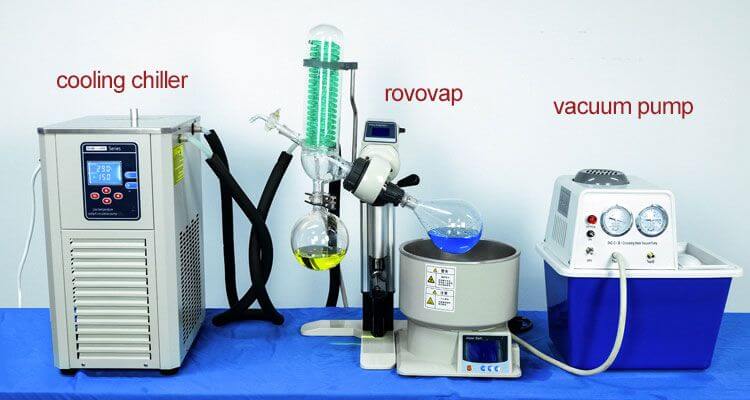
Les refroidisseurs de laboratoire sont largement utilisés dans les domaines de la recherche scientifique et industrielle.
Instruments analytiques
Prise en charge des refroidisseurs :
- Spectromètres de masse
- Systèmes de chromatographie
- Spectromètres
- Microscopes électroniques
Ces instruments génèrent de la chaleur pendant leur fonctionnement et la dérive thermique peut affecter :
- Sensibilité du détecteur
- Alignement optique
- Précision du signal
- Répétabilité des mesures
Biotechnologie et sciences de la vie
Les systèmes biologiques sont extrêmement sensibles à la température.
Les applications typiques incluent :
- Bioréacteurs
- Fermenteurs
- Systèmes PCR
- Matériel de culture cellulaire
Dans ces environnements, la stabilité thermique à long terme est souvent plus importante qu’une capacité de refroidissement élevée.
Synthèse chimique et contrôle des réactions
Les laboratoires chimiques utilisent fréquemment des refroidisseurs pour :
- Stabiliser les températures de réaction
- Contrôler les réactions exothermiques
- Prévenir l'emballement thermique
- Améliorer la sélectivité des réactions
Les vitesses de réaction suivent généralement une cinétique dépendante de la température.
Pour de nombreux systèmes chimiques :
k = Ae^{-\frac{E_a}{RT}}
Cela signifie que même de petits changements de température peuvent affecter considérablement la vitesse de réaction et la distribution du produit.
Recherche en science des matériaux et semi-conducteurs
Les refroidisseurs de laboratoire sont largement utilisés dans :
- Systèmes de cyclage thermique
- Tests de semi-conducteurs
- Dépôt de couches minces
- Caractérisation des matériaux
La température influence directement :
- Conductivité
- Comportement de cristallisation
- Propriétés mécaniques
- Transitions de phases
Une stabilité thermique élevée est essentielle pour des résultats de test reproductibles.
Recherche laser et photonique
Les systèmes laser nécessitent un refroidissement stable pour :
- Sources laser
- Composants optiques
- Electronique de puissance
- Systèmes de stabilisation de faisceau
L'instabilité de la température peut provoquer :
- Dérive de longueur d'onde
- Distorsion du faisceau
- Désalignement optique
- Efficacité laser réduite
Refroidisseurs de laboratoire refroidis par air ou refroidis par eau
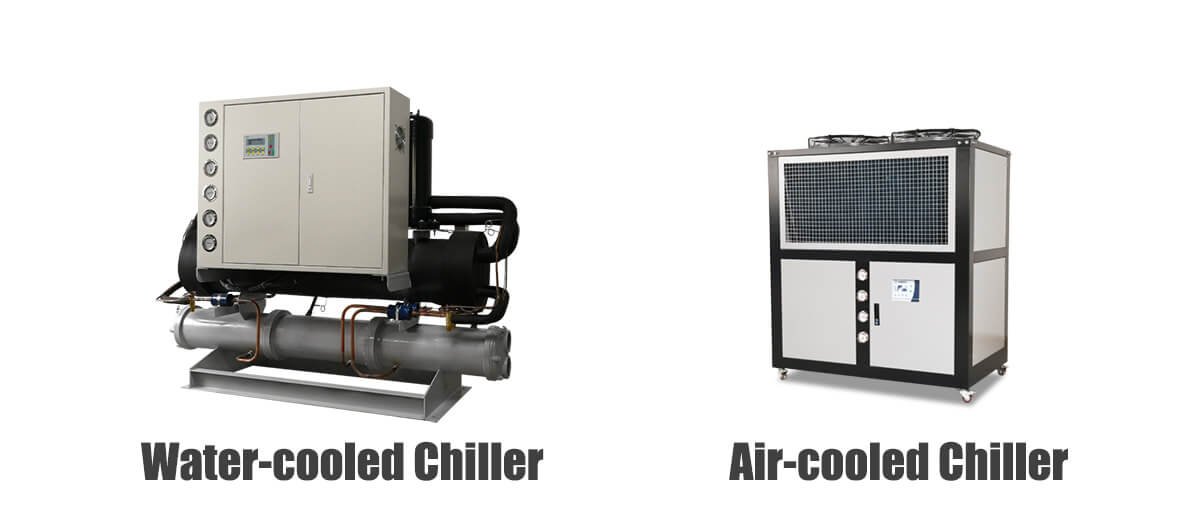
Les refroidisseurs à recirculation de laboratoire sont généralement disponibles dans deux configurations principales.
Tableau de comparaison
| Article | Refroidisseur à air | Refroidisseur à eau |
|---|---|---|
| Complexité de l'installation | Inférieur | Plus haut |
| Exigence en matière d'infrastructure | Minimal | Nécessite une boucle d'eau externe |
| Efficacité énergétique | Modéré | Plus haut |
| Stabilité de la température | Bien | Excellent |
| Sensibilité à la température ambiante | Haut | Faible |
| Niveau de bruit | Plus haut | Inférieur |
| Exigence d'entretien | Inférieur | Modéré |
| Meilleure application | Petits laboratoires | Grandes installations de recherche |
Refroidisseurs de laboratoire refroidis par air
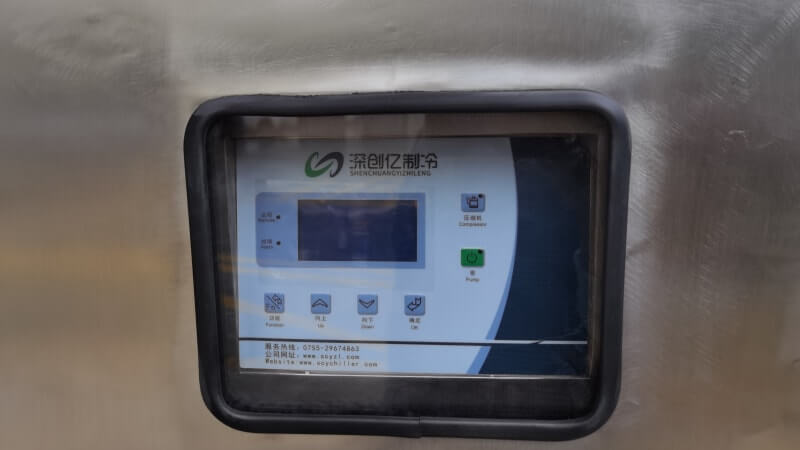
Les systèmes refroidis par air rejettent la chaleur directement dans l’air ambiant grâce à des condenseurs assistés par ventilateur.
Les avantages incluent :
- Installation simple
- Structure compacte
- Coût d’infrastructure réduit
- Déploiement flexible
Ils sont couramment utilisés pour :
- Bancs de recherche
- Petits laboratoires d'analyse
- Expériences décentralisées
- Systèmes de refroidissement portables
Cependant, les performances de refroidissement dépendent fortement de la température ambiante. Dans les environnements chauds, l’efficacité du rejet de chaleur diminue, ce qui peut réduire la stabilité de la température lors d’un fonctionnement de longue durée.
Refroidisseurs de laboratoire refroidis à l'eau
Les systèmes refroidis à l'eau rejettent la chaleur via un circuit d'eau secondaire connecté à :
- Tours de refroidissement
- Systèmes d'eau glacée pour installations
- Refroidisseurs secs
Étant donné que l'eau a une conductivité thermique et une capacité thermique plus élevées que l'air, les systèmes refroidis par eau offrent :
- Meilleure stabilité thermique
- Efficacité énergétique supérieure
- Température de refoulement du compresseur plus basse
- Fonctionnement plus stable à long terme
Les refroidisseurs refroidis par eau sont généralement préférés dans :
- Installations de laboratoire centralisées
- Centres de R&D pharmaceutiques
- Laboratoires de recherche sur les semi-conducteurs
- Grandes institutions scientifiques
Technologies de contrôle de température de précision
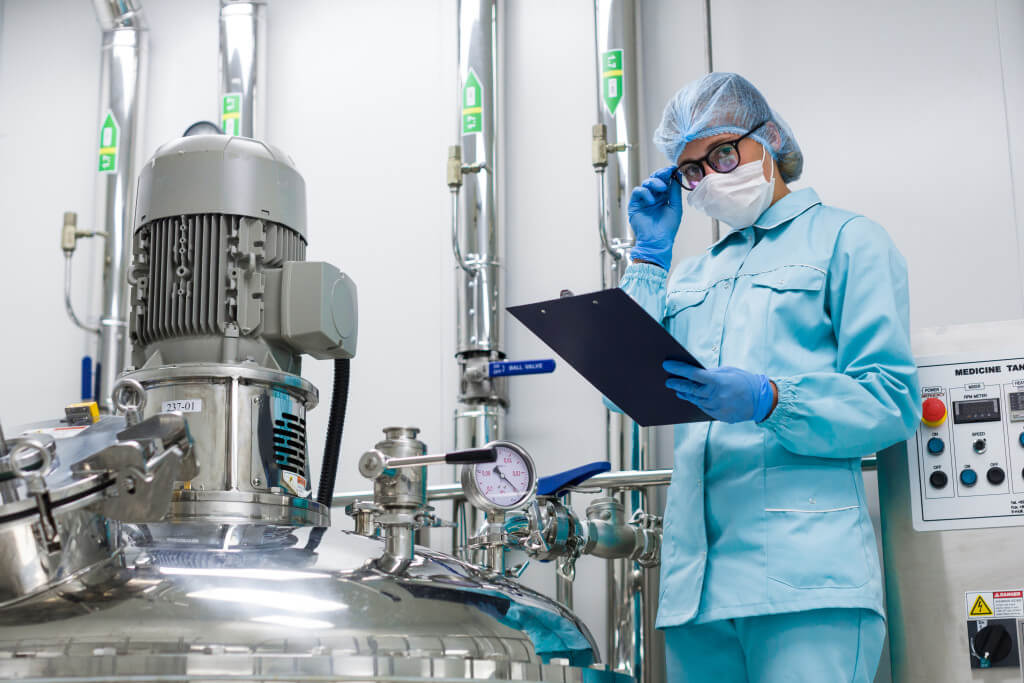
Les refroidisseurs de laboratoire modernes s'appuient sur des systèmes de contrôle avancés pour maintenir des conditions de fonctionnement stables.
Technologies de contrôle clés
| Technologie | Fonction principale |
|---|---|
| Contrôle PID | Régulation stable de la température |
| Algorithmes adaptatifs | Compensation de charge dynamique |
| Compresseurs à vitesse variable | Réglage du refroidissement en douceur |
| Détendeurs électroniques | Contrôle précis du réfrigérant |
| Commentaires multi-capteurs | Stabilité améliorée du système |
La stabilité de la température dépend non seulement de la capacité de refroidissement, mais également de :
- Précision du capteur
- Vitesse de réponse
- Cohérence du flux
- Gestion de l'inertie thermique
La conception à faible inertie thermique est particulièrement importante car elle permet au système de répondre rapidement aux changements brusques de charge expérimentale sans dépassement excessif.
Sélection du liquide de refroidissement dans les applications de laboratoire
Le choix du liquide de refroidissement affecte considérablement les performances du système.
Liquides de refroidissement courants en laboratoire
| Type de liquide de refroidissement | Avantages | Application typique |
|---|---|---|
| Eau désionisée | Efficacité élevée du transfert de chaleur | Refroidissement général de laboratoire |
| Mélange eau-glycol | Protection contre le gel | Applications à basse température |
| Fluides silicones | Large plage de température | Electronique de précision |
| Fluides fluorés | Isolation électrique | Refroidissement électronique spécialisé |
Le choix du liquide de refroidissement dépend de :
- Plage de température de fonctionnement
- Résistance à la corrosion
- Conductivité électrique
- Compatibilité biologique
- Caractéristiques de viscosité
Conclusion
Les refroidisseurs à recirculation de laboratoire sont des systèmes de gestion thermique essentiels pour la recherche scientifique moderne et les environnements analytiques de précision.
Les refroidisseurs refroidis par air offrent des solutions flexibles et rentables pour les petits laboratoires et les applications décentralisées, tandis que les systèmes refroidis par eau offrent une stabilité thermique et une efficacité supérieures pour les installations de recherche de plus grande taille et les environnements de haute précision.
Dans toutes les applications, l’objectif principal n’est pas simplement d’évacuer la chaleur, mais de maintenir des conditions thermiques stables et reproductibles qui garantissent :
- Précision expérimentale
- Fiabilité des instruments
- Cohérence des processus
- Stabilité opérationnelle à long terme
Alors que la recherche scientifique continue de progresser vers une plus grande précision et une plus grande automatisation, les refroidisseurs à recirculation de laboratoire resteront un élément essentiel de l’infrastructure de laboratoire moderne.
