

 Tragbarer Kühler
 Luftgekühlter Chiller
 Wassergekühlter Kühler
 Niedertemperaturkühler
 Kundenspezifischer Industriekühler


Bei Laserbearbeitungsanwendungen spielt der Kühler eine wichtige Rolle dabei, den Betrieb des Lasersystems stabil zu halten. Unabhängig davon, ob Sie eine Faserlaserschneidemaschine, einen CO₂-Lasergravierer, einen UV-Laserbeschrifter oder eine Laserschweißausrüstung verwenden, wirkt sich eine stabile Kühlung direkt auf die Schnittqualität, die Strahlstabilität und die Lebensdauer der Ausrüstung aus.
Bei der Auswahl des richtigen Kühlers kommt es nicht nur auf die Kühlleistung an. Dazu gehören auch die Genauigkeit der Temperaturregelung, der Wasserdurchfluss, die Arbeitsumgebung und die langfristigen Betriebsbedingungen.
In diesem Artikel wird erläutert, wie Sie die Kühlkapazität auf praktische und technikorientierte Weise an die Laserleistung anpassen können.
Warum Lasersysteme Kühlung benötigen
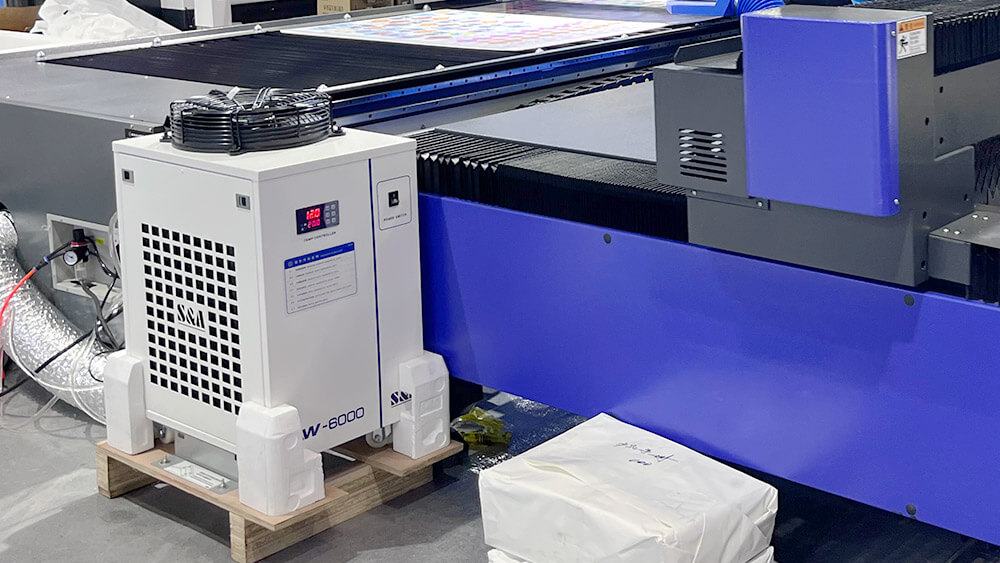
Laser erzeugen im Betrieb große Mengen Wärme. Selbst hocheffiziente Faserlaser wandeln nur einen Teil der elektrischen Energie in Laserleistung um. Der Rest wird zu Wärme innerhalb der Laserquelle und der optischen Komponenten.
Wenn die Wärme nicht rechtzeitig abgeführt wird, können verschiedene Probleme auftreten:
- Instabile Laserausgabe
- Reduzierte Schnittgenauigkeit
- Überhitzung der Linse
- Laseralarmabschaltungen
- Schnellere Alterung elektronischer Komponenten
Aus diesem Grund werden Industriekühler häufig in Laserschneid-, Schweiß-, Gravur- und Markiersystemen eingesetzt.
So berechnen Sie die Kapazität eines Kühlers
Bei der Auswahl eines Kühlers besteht der erste Schritt darin, die gesamte vom Lasersystem erzeugte Wärmelast abzuschätzen.
Eine häufig verwendete Berechnungsformel ist:
Q=(P×(1−η))/η×S
Wo:
- Q = Erforderliche Kühlleistung (kW)
- P = Laserausgangsleistung (kW)
- oder = Effizienz der elektrooptischen Umwandlung
- S = Sicherheitsfaktor, normalerweise 1,2–1,5
Wenn ein Faserlaser beispielsweise einen Wirkungsgrad von 40 % hat, werden etwa 60 % der Energie in Wärme umgewandelt, die von der Kältemaschine abgeführt werden muss.
In tatsächlichen industriellen Anwendungen reservieren Ingenieure normalerweise zusätzliche Kühlkapazität, um hohe Umgebungstemperaturen und langen Dauerbetrieb zu bewältigen.
Empfohlene Kühlleistung für Faserlaser
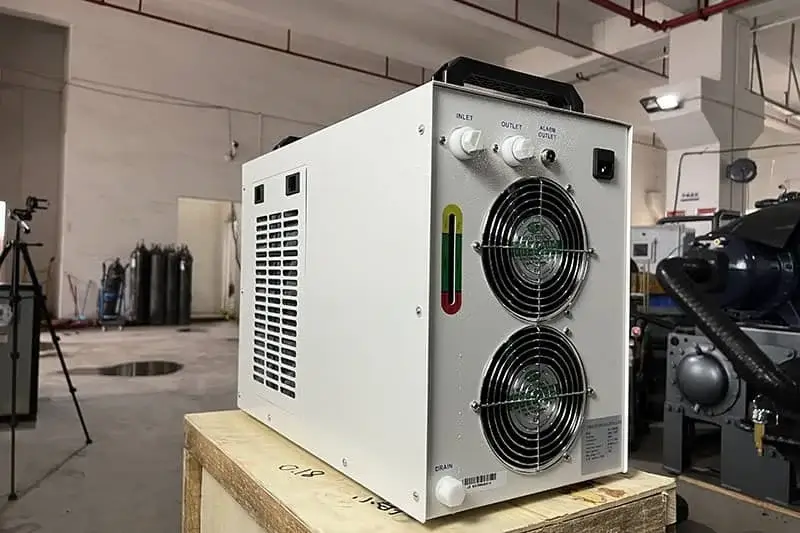
Die folgende Tabelle kann als allgemeine Referenz bei der Auswahl eines Kühlers für Faserlasergeräte verwendet werden.
| Laserleistung | Empfohlene Kühlleistung | Kühlerkonfiguration |
|---|---|---|
| 1 kW Faserlaser | 2,5 – 3,5 kW | Kompakter luftgekühlter Kühler |
| 3 kW Faserlaser | 8 – 10 kW | Doppelte Temperaturregelung |
| 6 kW Faserlaser | 16 – 20 kW | Industriekühler mit hohem Durchfluss |
| 12 kW Faserlaser | 32 – 40 kW | Wassergekühltes Kühlsystem |
| 20 kW+ Faserlaser | 60 kW+ | Industriesystem mit mehreren Kompressoren |
Die tatsächlichen Anforderungen können je nach Lasermarke, Umgebungstemperatur und Produktionsbedingungen variieren.
Wichtige Faktoren bei der Auswahl eines Laserkühlers
Temperaturstabilität
Hochleistungslasersysteme erfordern eine präzise Temperaturkontrolle. Standardmäßige industrielle Kühlung kann eine Genauigkeit von ±1 °C liefern, während Laseranwendungen oft ±0,1 °C bis ±0,5 °C erfordern.
Eine stabile Temperatur trägt dazu bei, während langer Produktionszyklen eine gleichbleibende Strahlqualität aufrechtzuerhalten.
Wasserdurchfluss und Pumpendruck
Die Kühlleistung hängt nicht nur von der Temperatur, sondern auch von der Wasserzirkulation ab.
Wenn der Wasserdruck zu niedrig ist, zirkuliert das Kühlmittel möglicherweise nicht richtig in der Laserquelle, was zu lokalen Überhitzungsproblemen führen kann.
Bestätigen Sie vor der Auswahl eines Kühlers immer Folgendes:
- Wasserdurchflussrate
- Pumpenkopfdruck
- Anforderungen an den Rohrdurchmesser
Doppelte Temperaturregelung
Viele Faserlasersysteme erfordern zwei unabhängige Kühlkreisläufe:
- Eine für die Laserquelle
- Eines für den Schneidkopf oder die Optik
Die Laserquelle wird normalerweise auf ca. gekühlt:
22 °C bis 25 °C
Der optische Kopf benötigt möglicherweise eine etwas höhere Temperatur, um das Kondensationsrisiko zu verringern.
Zweikreiskühler tragen dazu bei, einen stabilen Betrieb unter verschiedenen Arbeitsbedingungen aufrechtzuerhalten.
Umgebungstemperatur
Die Fabrikumgebung hat einen großen Einfluss auf die Kühlleistung.
Die meisten Kältemaschinen werden unter Standardbedingungen ausgelegt, typischerweise:
- Umgebungstemperatur: 25°C
- Austrittswassertemperatur: 20°C
Wenn die Werkstatttemperaturen im Sommer 35 °C oder mehr erreichen, nimmt die tatsächliche Kühlleistung merklich ab.
In heißen Umgebungen wird normalerweise die Auswahl eines größeren Kühlers empfohlen.
Wasserqualität
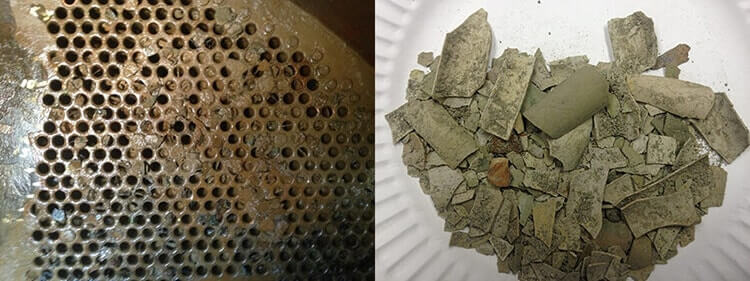
Eine schlechte Wasserqualität kann folgende Ursachen haben:
- Skalierung
- Korrosion
- Verstopfte Kühlkanäle
Für Präzisionslasergeräte empfehlen viele Hersteller:
- Gefiltertes Wasser
- Entionisiertes Wasser
- Kühlmittel mit geringer Leitfähigkeit
Durch die richtige Wasseraufbereitung kann die Lebensdauer des Lasers und des Kühlers verlängert werden.
Häufige Fehler bei der Auswahl eines Kühlers
Auswahl eines unterdimensionierten Kühlers
Ein Kühler mit unzureichender Kapazität läuft möglicherweise ständig unter Volllast, was zu instabilen Temperaturen und häufigen Alarmen führt.
Ignorieren der Belüftungsbedingungen
Luftgekühlte Kältemaschinen benötigen ausreichend Platz zur Wärmeableitung. Ein schlechter Luftstrom um den Kondensator herum kann zu Hochdruckfehlern führen.
Mit Blick auf den langfristigen Betrieb
Einige Fabriken betreiben Lasergeräte rund um die Uhr. In diesen Situationen sind Kompressoren in Industriequalität und stabile Kühlsysteme unerlässlich.
Auswahl der Kühlleistung nur durch Erfahrung
Einige Benutzer wählen Kühler nur auf der Grundlage früherer Projekte aus, ohne die tatsächlichen Laserspezifikationen zu überprüfen. Verschiedene Lasermarken und Anwendungen können sehr unterschiedliche Kühlanforderungen haben.
Luftgekühlte vs. wassergekühlte Kältemaschinen
Luftgekühlte Kältemaschinen
Vorteile:
- Einfachere Installation
- Niedrigere Anschaffungskosten
- Kein Kühlturm erforderlich
Geeignet für:
- Kleine und mittlere Lasersysteme
- Standard-Werkstattumgebungen
Wassergekühlte Kältemaschinen
Vorteile:
- Höhere Kühleffizienz
- Besser für Hochleistungslaser
- Stabiler im Dauerbetrieb
Geeignet für:
- Große Faserlaserschneidemaschinen
- Schwere industrielle Produktionslinien
- Umgebungen mit hoher Umgebungstemperatur
Abschluss
Für einen stabilen Laserbetrieb und eine lange Gerätelebensdauer ist die Abstimmung der Kühlleistung auf die Laserleistung von entscheidender Bedeutung.
Ein geeigneter Laserkühler sollte Folgendes bieten:
- Ausreichende Kühlleistung
- Stabile Temperaturregelung
- Zuverlässige Wasserzirkulation
- Effiziente Langzeitleistung
Vor der Auswahl eines Kühlers ist es wichtig, die Laserleistung, die Betriebsumgebung, die Betriebsstunden und die Anforderungen an die Kühlgenauigkeit zu bewerten.
Als Hersteller von Industriekühlern bieten wir maßgeschneiderte Kühllösungen für Faserlaserschneid-, Schweiß-, Markier- und Gravuranwendungen. Die richtige Auswahl des Kühlers kann die Produktionsstabilität verbessern, Ausfallzeiten reduzieren und dazu beitragen, wertvolle Lasergeräte langfristig zu schützen.
