

 Tragbarer Kühler
 Luftgekühlter Chiller
 Wassergekühlter Kühler
 Niedertemperaturkühler
 Kundenspezifischer Industriekühler


Fermentationstanks stehen im Mittelpunkt vieler Produktionsindustrien – Bier, Wein, Kombucha, Milchkulturen, biotechnologische Fermentation und sogar funktionelle Getränke. In all diesen Systemen ist die Temperatur nicht nur ein unterstützender Parameter; es ist ein Direktfahrer von biochemischer Reaktionsgeschwindigkeit, Geschmacksbildung, mikrobieller Stabilität und Endproduktkonsistenz. Wenn die Temperatur falsch eingestellt ist, leidet im Grunde alles darunter.
Im Gegensatz zur allgemeinen industriellen Kühlung muss sich die Fermentationskühlung einer besonderen Herausforderung stellen: Kontinuierliche interne Wärmeerzeugung in einem geschlossenen biologischen System. Hefe- und mikrobieller Stoffwechsel erzeugen als Nebenprodukt Wärme, was bedeutet, dass sich der Tank selbst wie ein selbsterhitzender Reaktor verhält. Es kocht buchstäblich von innen nach außen.
Aus diesem Grund wird das „beste Kühlsystem“ nicht durch die reine Kühlkapazität definiert, sondern durch Temperaturstabilität, Reaktionsgeschwindigkeit und Zonensteuerungsfähigkeit. Betrachten Sie es weniger als eine Klimaanlage, sondern eher als einen Thermostat für einen lebendigen, atmenden Prozess.
Warum die Kontrolle der Fermentationstemperatur so empfindlich ist
Während der Fermentation folgen biochemische Reaktionen einer temperaturabhängigen Kinetik. Mit steigender Temperatur beschleunigt sich die Hefeaktivität, wodurch mehr Alkohol und CO₂ produziert werden – aber auch das Risiko unerwünschter Nebenprodukte wie Fuselalkohole oder Esterungleichgewicht steigt. Wenn Sie die Temperatur zu hoch einstellen, entstehen lösungsmittelartige Beigeschmacksnoten, die im Grunde genommen nicht behebbar sind. Senken Sie den Wert zu niedrig, verlangsamt sich die Fermentation oder kommt ganz zum Stillstand, sodass Sie ein zu wenig verfeinertes Produkt erhalten.
In der Praxis arbeiten die meisten Fermentationssysteme in einem sehr engen Bereich:
| Fermentationstyp | Typischer Bereich | Stabilität erforderlich |
|---|---|---|
| Ale-Gärung | 18–22°C | ±0,5°C |
| Lagergärung | 8–12°C | ±0,3°C |
| Kaltkonditionierung/Lagerung | 0–4°C | ±0,5°C |
| Kombucha | 22–30°C | ±1,0°C |
| Milchkulturen (Joghurt) | 35–45°C | ±0,5°C |
Aber die eigentliche technische Herausforderung besteht nicht darin, einen Sollwert einzuhalten, sondern in der Handhabung Temperaturspitzen durch aktive Gärung. Während der höchsten Hefeaktivität (normalerweise 24 bis 72 Stunden nach Beginn der Gärung) kann ein großer Tank genügend Stoffwechselwärme erzeugen, um die Innentemperatur zu erhöhen 1–3°C pro Stunde wenn nicht aktiv kontrolliert. Das ist ein ernstes Problem, wenn Sie versuchen, ±0,5 °C zu halten.
Typische Hefewärmeleistung: 70–120 W pro 10⁹ Zellen/L
Ein 100-HL-Ale-Fermenter kann produzieren 40–80 kW Wärme während der Spitzenaktivität – entspricht dem Betrieb von 40–80 Raumheizgeräten in Ihrem Tank.
Aus diesem Grund müssen Fermentationskühlsysteme kontinuierlich Wärme abführen und gleichzeitig eine hohe Stabilität aufrechterhalten, oft innerhalb der Anlage ±0,5°C oder besser.
Wie Fermentationskühlsysteme tatsächlich funktionieren
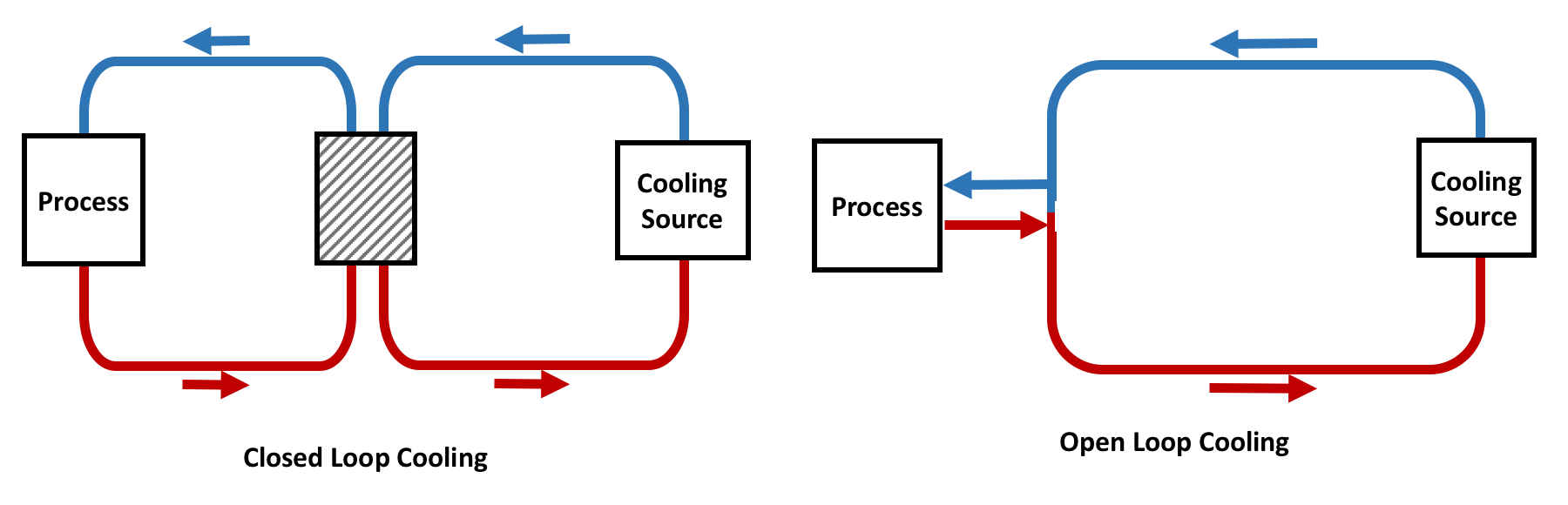
Die meisten modernen Gärkühlsysteme basieren auf a Wärmeübertragungsarchitektur mit geschlossenem Kreislauf. Eine gekühlte Flüssigkeit – in der Regel eine Glykol-Wasser-Mischung oder je nach Anwendung gekühltes Wasser – zirkuliert durch einen Mantel oder eine interne Kühlschlange um den Gärtank.
Die Wärmeübertragung erfolgt indirekt über eine ziemlich einfache Kette:
- Die Hefeaktivität erzeugt Wärme im Tank
- Wärme gelangt durch Edelstahltankwände (Konduktion)
- Kühlmantel nimmt Wärme über zirkulierende Flüssigkeit auf (Konvektion)
- Die Flüssigkeit kehrt zur erneuten Kühlung zur Kühleinheit zurück
Diese indirekte Struktur ist wichtig, da sie das Kühlmedium vom Produkt isoliert hält und gleichzeitig eine kontrollierte Wärmeabfuhr ermöglicht. Sie möchten auf keinen Fall, dass sich Glykol mit Ihrem Bier vermischt.
Auf Systemebene besteht eine Fermentationskühlanlage typischerweise aus drei wichtigen Teilsystemen: der Kühleinheit, dem Verteilungskreislauf und der Wärmeaustauschschnittstelle auf Tankebene.
Die Kühleinheit ist für die Aufrechterhaltung eines stabilen Tieftemperaturreservoirs verantwortlich. In den meisten Fermentationssystemen wird Glykol anstelle von reinem Wasser verwendet, da es einen Betrieb unter 0 °C ohne Frostgefahr ermöglicht. Glykolsysteme werden üblicherweise in Betrieb genommen −2°C bis +2°C Vorlauftemperatur, die Ihnen genügend thermischen Spielraum für die Fermentationskontrolle und Kaltabbruchvorgänge bietet.
Die Verteilungsschleife übernimmt den Flüssigkeitstransport über mehrere Tanks hinweg. Hier wird die hydraulische Stabilität entscheidend. Selbst kleine Schwankungen der Durchflussrate können zu einer ungleichmäßigen Kühlung über die Fermenter hinweg führen, was zu Chargeninkonsistenzen führt – etwas, das kein Brauer seinem Qualitätsteam erklären möchte.
Die Tankschnittstelle– normalerweise ein Mantel oder eine interne Spule – ist der Ort, an dem tatsächlich der Wärmeaustausch stattfindet. Seine Effizienz hängt stark von der Kontaktfläche und dem Strömungsregime ab. Schlechtes Jackendesign kann dazu führen thermische SchichtungDabei kühlen Teile des Tanks schneller ab als andere, was zu einer ungleichmäßigen Gärung in der gesamten Charge führt.
Glykol-Kühlsysteme (Der Industriestandard für die Fermentation)
In den meisten kommerziellen Brauereien und Fermentationsanlagen sind glykolbasierte Systeme die vorherrschende Lösung – und das aus gutem Grund.
Der Grund ist einfach: Glykol erweitert den nutzbaren Temperaturbereich unter den Gefrierpunkt und ermöglicht es dem System, auch unter hohen Lastbedingungen einen kalten Wärmespeicher aufrechtzuerhalten. Dies ermöglicht eine präzise Fermentationssteuerung, schnelle Abkühlung und Cold-Crash-Fähigkeit – alles mit einem System. Es ist im Grunde das Schweizer Taschenmesser der Gärungskühlung.
Ein typisches Glykolsystem verfügt über ein gekühltes Reservoir −2°C bis +2°C. Dieser Niedertemperaturpuffer ermöglicht es dem System, die Fermentationswärme schnell zu absorbieren und gleichzeitig die Tanktemperatur genau zu kontrollieren.
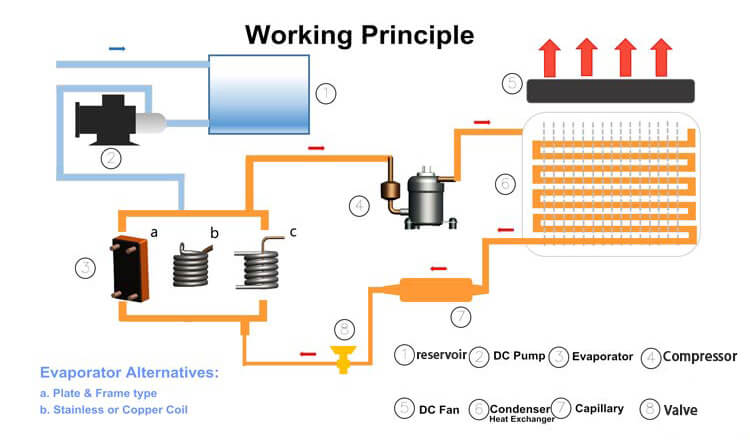
Aus Sicht des Systemdesigns werden Glykolkühler mit einem gebaut Puffertank + Pumpe + Verteilerarchitektur. Der Pufferspeicher ist besonders wichtig, da er als thermischer Stabilisator fungiert – stellen Sie sich ihn also wie einen Temperatur-Stoßdämpfer vor. Es verhindert Kurzzyklen des Kompressors und absorbiert plötzliche Lastspitzen während der höchsten Fermentationsaktivität, sodass das gesamte System reibungslos läuft.
In Mehrtanksystemen ermöglicht auch Glykol Zonensteuerung. Jeder Gärtank kann unabhängig über Magnetventile oder Durchflussregler reguliert werden, sodass verschiedene Biersorten oder Gärungsstufen gleichzeitig bei unterschiedlichen Temperaturen betrieben werden können. Ein Tank könnte eine Ale-Gärung bei 20 °C durchführen, während ein anderer bei 1 °C kalt abstürzt – alles im selben Glykolkreislauf.
Wasserkühlsysteme (begrenzt, aber immer noch in bestimmten Fällen verwendet)
Wasserbasierte Kühlsysteme sind einfacher aufgebaut, bei Fermentationsanwendungen jedoch deutlich eingeschränkter. Sie sind nicht schlecht – sie haben nur eine engere Komfortzone.
Sie arbeiten in einem höheren Temperaturbereich, typischerweise darüber 5°C, da Wasser bei 0 °C gefriert und nicht sicher für den Minus-Pufferbetrieb verwendet werden kann. Dies schränkt ihren Nutzen in Fermentationsumgebungen ein, in denen ein Kaltabsturz oder eine Lagerung erforderlich ist.
In bestimmten Szenarien haben Wasserkühler jedoch immer noch ihre Berechtigung:
- Würzekühlung vor Beginn der Gärung, wo die Temperaturen relativ hoch sind (80–95 °C bis hin zu 10–20 °C) und das Einfrieren kein Problem darstellt
- Warme Gärung Anwendungen wie Kombucha oder Milchkulturen, die keine Minustemperaturen erfordern
In diesen Fällen bietet Wasser eine etwas bessere Wärmeleitfähigkeit (~0,6 W/m·K gegenüber ~0,4 W/m·K für Glykolmischungen) und Wärmekapazität, was eine effizientere Wärmeübertragung bedeutet, wenn Sie im Komfortbereich arbeiten.
Sobald jedoch die Gärung beginnt und Sie dringend Kühlleistung benötigen, fehlt den Wassersystemen der ausreichende thermische Spielraum. Sie können in Phasen hoher Stoffwechselaktivität keine aggressive Kühlung aufrechterhalten, weshalb sie als primäre Fermentationskontrollsysteme für die meisten kommerziellen Anwendungen ungeeignet sind.
Luftgekühlte vs. wassergekühlte Kältemaschinen in Fermentationsanwendungen
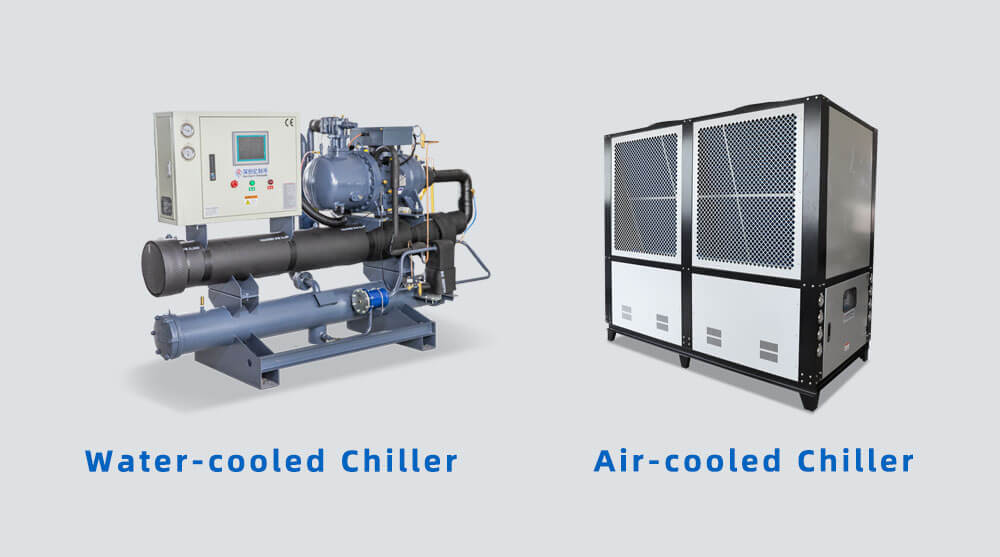
Das Kühlsystem selbst kann entweder luftgekühlt oder wassergekühlt sein, und diese Wahl wirkt sich auf die Gesamteffizienz und Skalierbarkeit des Systems aus.
| Artikel | Luftgekühlter Chiller | Wassergekühlter Kühler |
|---|---|---|
| Installation | Einfacher, keine Wasserinfrastruktur | Komplexer, benötigt einen Kühlturm |
| Umgebungsempfindlichkeit | Hoch (5–8 % Kapazitätsverlust pro 10 °C Anstieg) | Niedrig (2–3 % pro 10 °C Anstieg) |
| Energieeffizienz (COP) | 3,0–4,5 | 4,0–6,0 |
| Am besten für | Kleine bis mittlere Brauereien | Große Mehrtankanlagen |
| Langfristige Betriebskosten | Höher in heißen Klimazonen | Bei anhaltender Belastung absenken |
Luftgekühlte Kältemaschinen Geben Sie die Wärme mithilfe von Kondensatorventilatoren direkt an die Umgebungsluft ab. Sie sind einfacher zu installieren und erfordern keine externe Wasserinfrastruktur, wodurch sie sich für kleine oder mittlere Fermentationsanlagen eignen, bei denen Einfachheit und geringere Vorlaufkosten im Vordergrund stehen. Der Nachteil besteht darin, dass sie dem Wetter ausgeliefert sind – an einem Tag mit 35 °C arbeitet Ihr Kühler deutlich härter als an einem Tag mit 20 °C.
Wassergekühlte Chiller Verwenden Sie einen sekundären Wasserkreislauf, um die Wärme über Kühltürme oder Trockenkühler abzuleiten. Da Wasser über eine deutlich höhere Wärmeübertragungsfähigkeit als Luft verfügt, sorgen diese Systeme im Dauerbetrieb für stabilere Kondensationsbedingungen und einen höheren Wirkungsgrad. In großen Fermentationsanlagen mit mehreren gleichzeitig laufenden Tanks werden im Allgemeinen wassergekühlte Systeme bevorzugt – sie kommen bei hoher Belastung einfach nicht so ins Schwitzen wie luftgekühlte Einheiten.
Was eigentlich das „beste“ Fermentationskühlsystem ausmacht
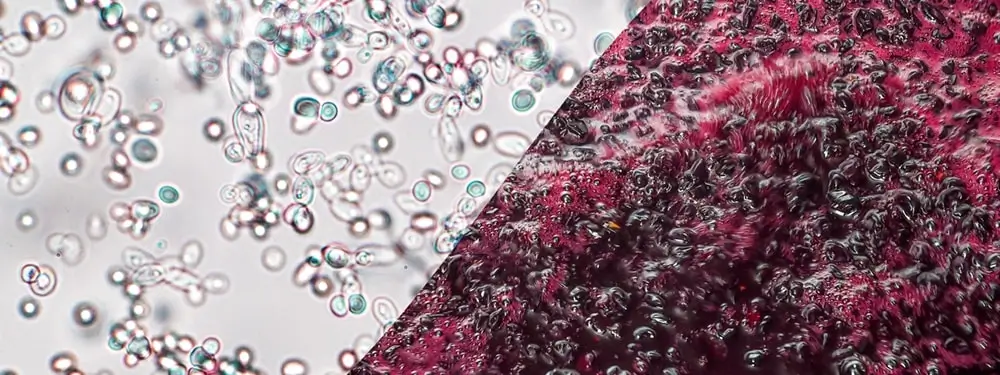
Das beste System wird nicht allein durch die Kühlleistung definiert, sondern durch seine Leistungsfähigkeit dynamische biologische Belastungsbedingungen. Ein großer Kühler, der die Stabilität nicht aufrechterhalten kann, ist wohl schlechter als ein kleinerer, der absolut standfest ist.
Ein leistungsstarkes Fermentationskühlsystem muss die Stabilität unter drei Arten von Schwankungen aufrechterhalten:
Erstens gibt es metabolische Wärmeschwankungen. Da die Hefeaktivität während der Gärungsphasen zunimmt oder abnimmt, ändert sich die Wärmeleistung kontinuierlich. Das Kühlsystem muss reibungslos reagieren, ohne die Temperaturziele zu überschreiten. Stellen Sie sich das wie eine Fahrt auf einer kurvenreichen Straße vor – Sie benötigen eine sanfte Lenkung, keine ruckartigen Korrekturen.
An zweiter Stelle steht die hydraulische Stabilität. Die Konsistenz der Durchflussrate ist von entscheidender Bedeutung, da eine ungleichmäßige Zirkulation zu lokalen Temperaturgradienten innerhalb der Tanks führt, was sich direkt auf die Gleichmäßigkeit der Fermentation auswirkt. Wenn eine Seite Ihres Tanks 2 °C wärmer ist als die andere, kommt es zu einer ungleichmäßigen Geschmacksentwicklung in der gesamten Charge.
An dritter Stelle steht die Fähigkeit zur thermischen Pufferung. Systeme mit Puffertanks oder Glykolreservoirs können plötzliche Lastspitzen ohne sofortige Belastung des Kompressors absorbieren, was sowohl die Stabilität als auch die Lebensdauer der Ausrüstung verbessert. Es ist der Unterschied zwischen einem System, das in Panik gerät, und einem, das es gelassen hinnimmt.
In fortgeschrittenen Setups spielen auch Steuerungssysteme eine große Rolle. Moderne Gärungskühlsysteme verwenden häufig PID-basierte oder adaptive Steuerlogik, um Pumpengeschwindigkeit, Ventilposition und Kompressorleistung kontinuierlich anzupassen, basierend auf Echtzeit-Feedback von mehreren Temperatursensoren, die innerhalb oder in der Nähe von Gärtanks platziert sind.
Design auf Systemebene in modernen Fermentationsanlagen
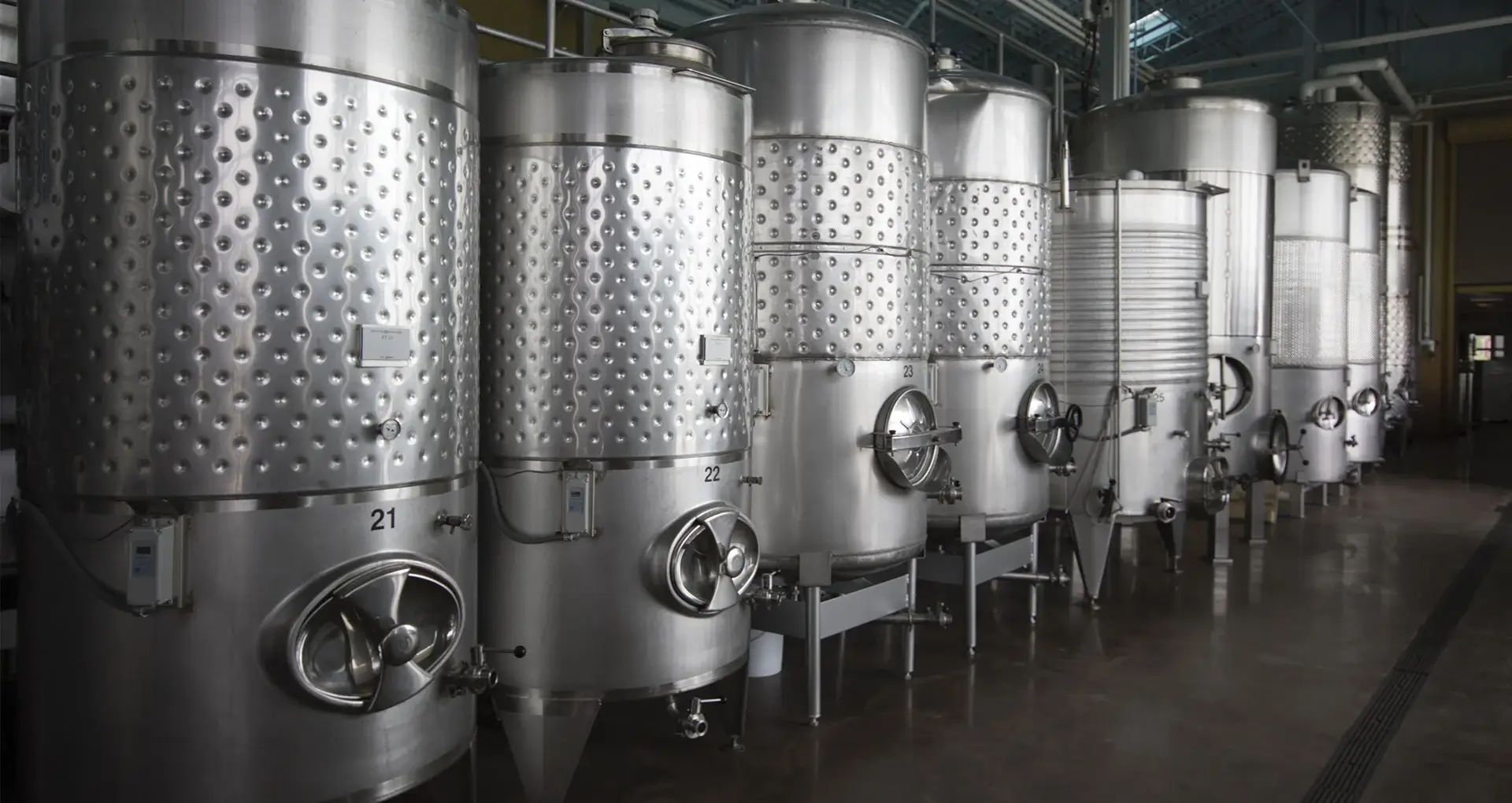
Die meisten modernen Fermentationsanlagen sind nicht auf einen einzigen Kühlkreislauf angewiesen. Stattdessen verwenden sie a geschichtete Architektur Das gibt ihnen Flexibilität und Redundanz.
Ein zentraler Kühler erzeugt gekühltes Glykol oder Wasser, das auf mehrere Fermentationszonen verteilt wird. Jeder Tank oder jede Tankgruppe verfügt über lokale Steuerventile, die den Durchfluss auf der Grundlage individueller Temperatursollwerte regeln.
Diese Architektur ermöglicht den gleichzeitigen Betrieb verschiedener Fermentationsstufen – beispielsweise ein Tank in aktiver Fermentation bei 20 °C, ein anderer in der Kaltkonditionierung bei 2 °C und ein anderer in der Crash-Kühlung bei 0 °C –, ohne dass es zu gegenseitigen thermischen Beeinträchtigungen kommt. Es ist, als ob es unabhängige Klimazonen im selben Gebäude gäbe.
In großen Produktionsumgebungen ist häufig auch Redundanz enthalten. Systeme können Doppelpumpen oder Backup-Kühler verwenden, um einen kontinuierlichen Betrieb sicherzustellen, da selbst kurze Unterbrechungen die Fermentationsstabilität und die Chargenqualität beeinträchtigen können. Ein 30-minütiger Kühlverlust während der Hauptgärung scheint nicht viel zu sein, kann aber zu Temperaturspitzen führen, die den Geschmack dauerhaft beeinträchtigen.
Abschluss
Das beste Kühlsystem für Gärtanks ist nicht ein einzelner Maschinentyp, sondern ein kontrolliertes thermisches Ökosystem auf das Verhalten biologischer Prozesse ausgerichtet.
Wassersysteme sind auf Anwendungen mit höheren Temperaturen beschränkt und erfüllen hauptsächlich unterstützende Funktionen – ideal zum Kühlen der Würze, nicht so gut zum Halten Ihres Lagerbiers bei 8 °C während eines heißen Sommers. Luftgekühlte Kältemaschinen bieten Flexibilität und Einfachheit für kleinere Betriebe, bei denen das Budget wichtiger ist als der letzte Bruchteil eines Grads. Glykolbasierte Systeme mit geschlossenem Kreislauf bleiben jedoch aufgrund ihrer Fähigkeit, unterhalb des Gefrierpunkts zu arbeiten, eine hohe Stabilität aufrechtzuerhalten und die Produktion in mehreren Tanks gleichzeitig zu unterstützen, weiterhin der Industriestandard für eine präzise Fermentationssteuerung.
Letztlich geht es bei der Fermentationskühlung nicht darum, Wärme abzuführen, sondern darum Kontrolle des biologischen Verhaltens durch Temperaturstabilität. Die effektivsten Systeme sind diejenigen, die bei sich ändernden Stoffwechselbelastungen konstante thermische Bedingungen aufrechterhalten und so vorhersehbare Fermentationsergebnisse und wiederholbare Produktqualität gewährleisten. Denn letztendlich ist es die Konsistenz, die eine gute Brauerei von einer großartigen unterscheidet.
